✨ New Arrivals Just Dropped!Explore
HomeStore

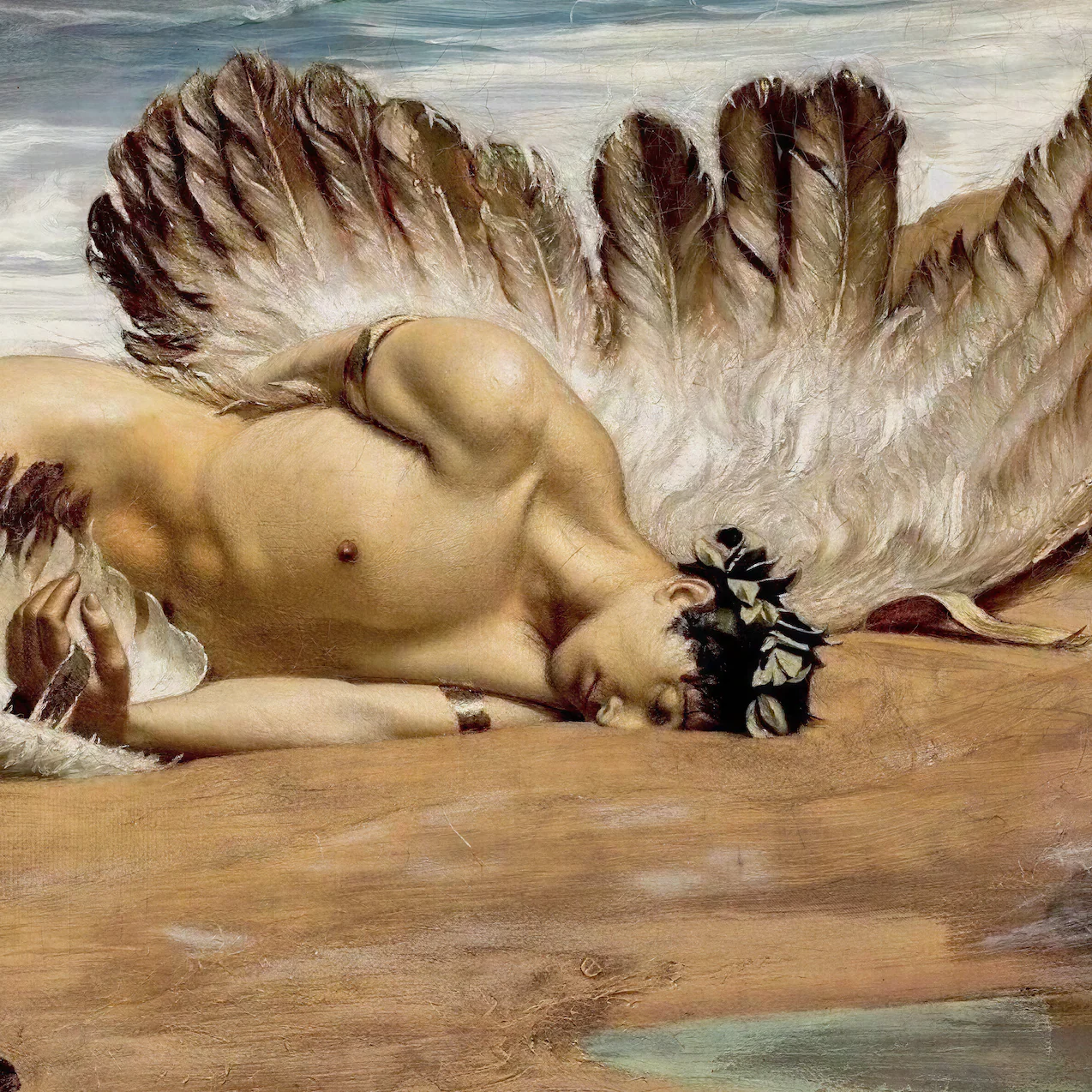
The Death of Icarus | Alexandre Cabanel | 19th Century

Product image 1
Product image 2
Product image 3
Product image 4
Product image 5
Product image 6
Product image 7
Product image 8

The Death of Icarus | Alexandre Cabanel | 19th Century

The Death of Icarus | Alexandre Cabanel | 19th Century

About the artwork:

Alexandre Cabanel’s The Death of Icarus transforms the familiar Greek myth into a sensual, mournful meditation on youthful ambition and tragic downfall. Rather than dramatizing the fall itself, Cabanel lingers on its aftermath, presenting Icarus as a beautiful, almost angelic figure whose lifeless body contrasts sharply with the serene, luminous landscape around him. This tension between beauty and death—one of Cabanel’s trademarks—invites the viewer to contemplate the seductive allure of idealism and the high cost of defying human limits. The soft, polished academic style heightens the tragedy: Icarus appears not as a reckless boy but as a fallen dreamer, suggesting that the myth endures not because of its warning against pride, but because it captures the fragility of human aspiration.

Select Select Size
Select Frame Options
From $89.35

Original: $297.82

-70%
The Death of Icarus | Alexandre Cabanel | 19th Century

$297.82

$89.35

Product Information

Shipping & Returns

Description

About the artwork:

Alexandre Cabanel’s The Death of Icarus transforms the familiar Greek myth into a sensual, mournful meditation on youthful ambition and tragic downfall. Rather than dramatizing the fall itself, Cabanel lingers on its aftermath, presenting Icarus as a beautiful, almost angelic figure whose lifeless body contrasts sharply with the serene, luminous landscape around him. This tension between beauty and death—one of Cabanel’s trademarks—invites the viewer to contemplate the seductive allure of idealism and the high cost of defying human limits. The soft, polished academic style heightens the tragedy: Icarus appears not as a reckless boy but as a fallen dreamer, suggesting that the myth endures not because of its warning against pride, but because it captures the fragility of human aspiration.