The Duel After the Masquerade | Jean-Léon Gerôme | 1857-59
About the artwork:
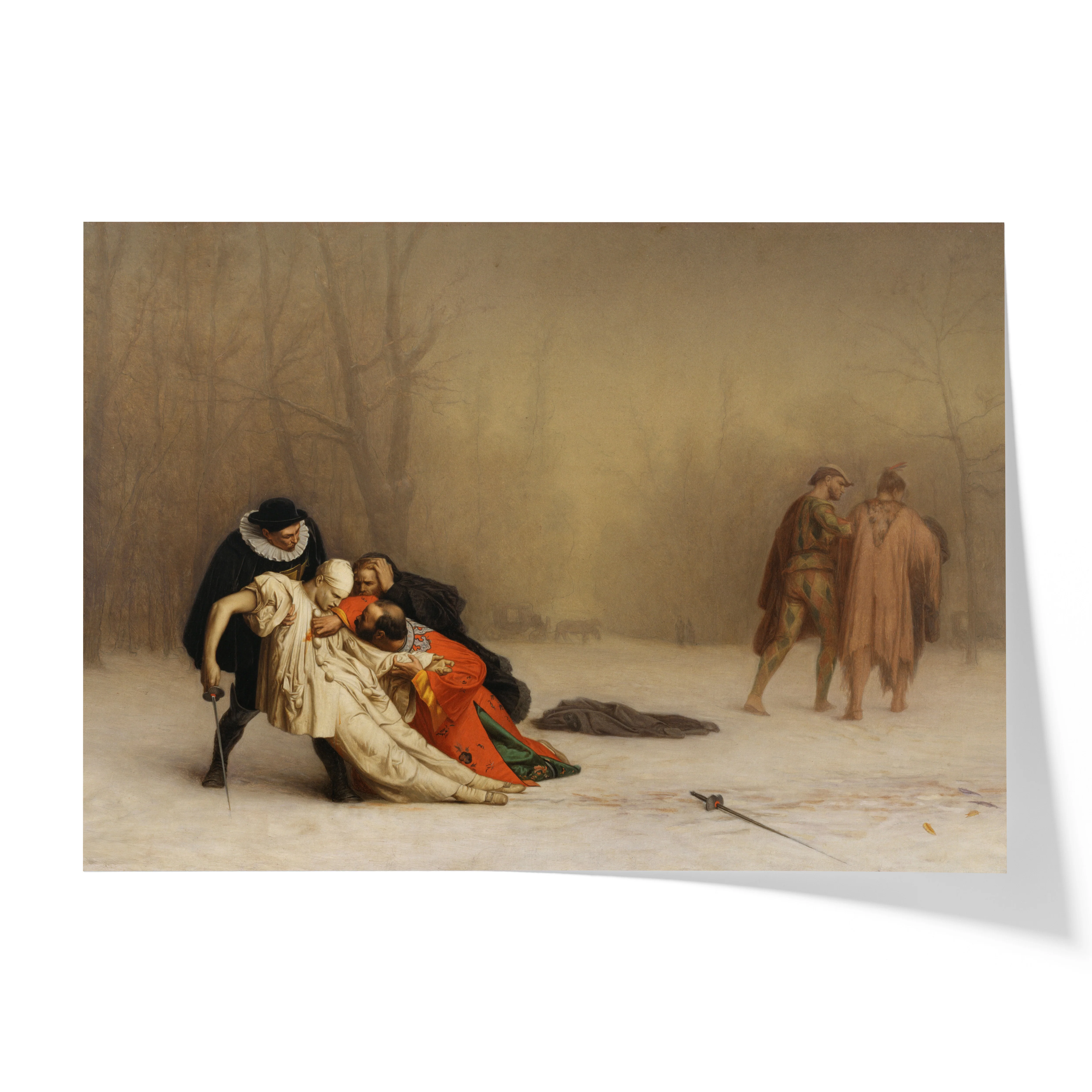
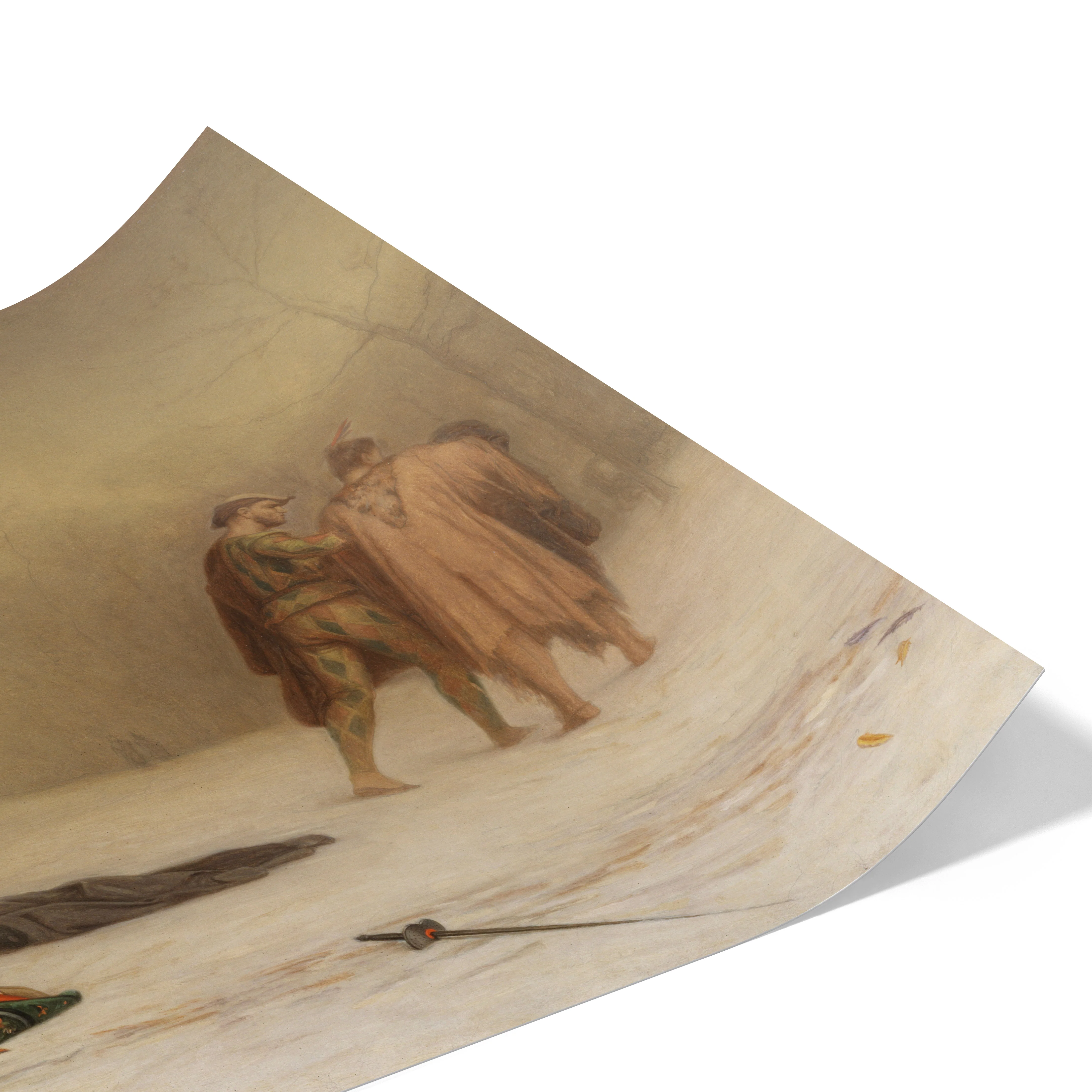
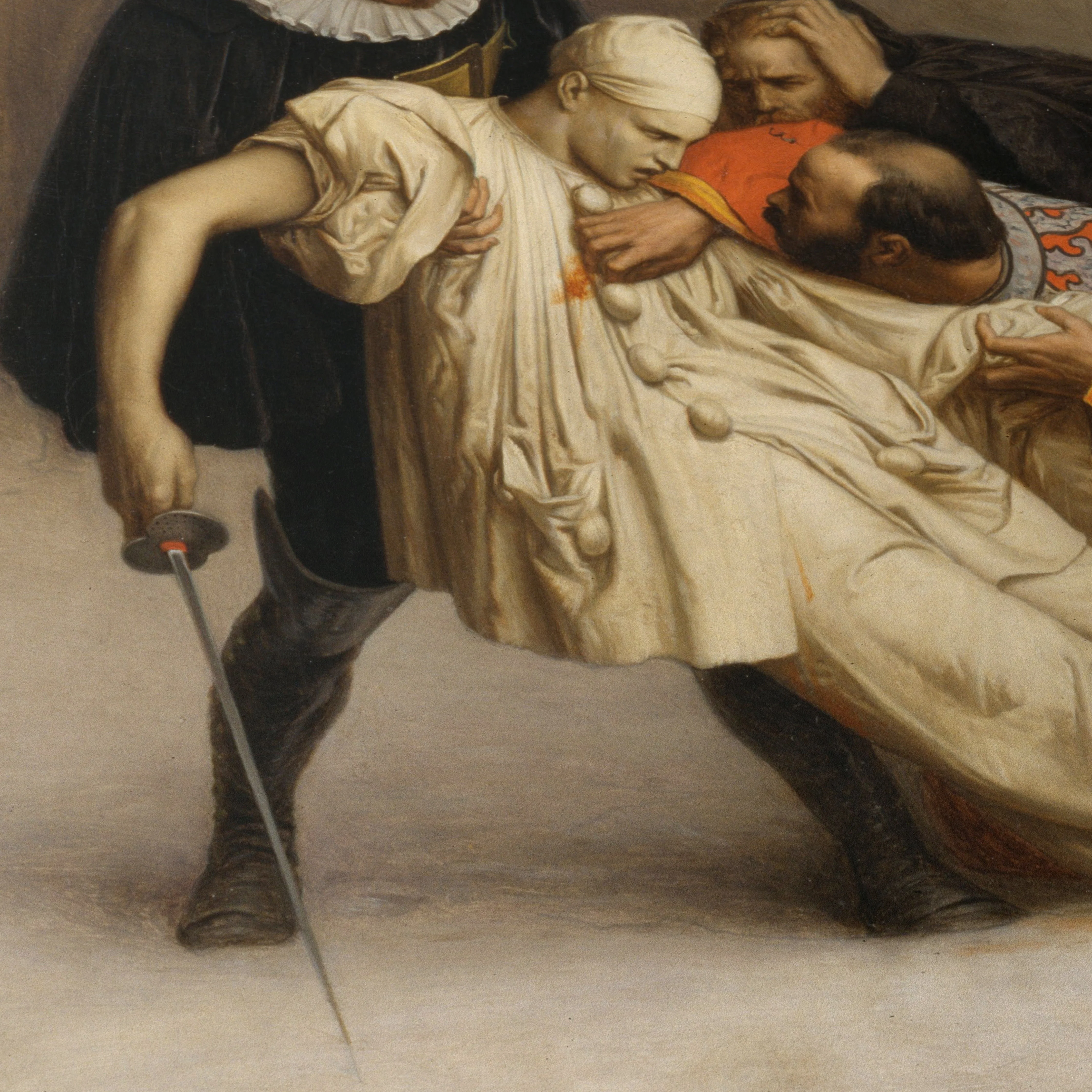
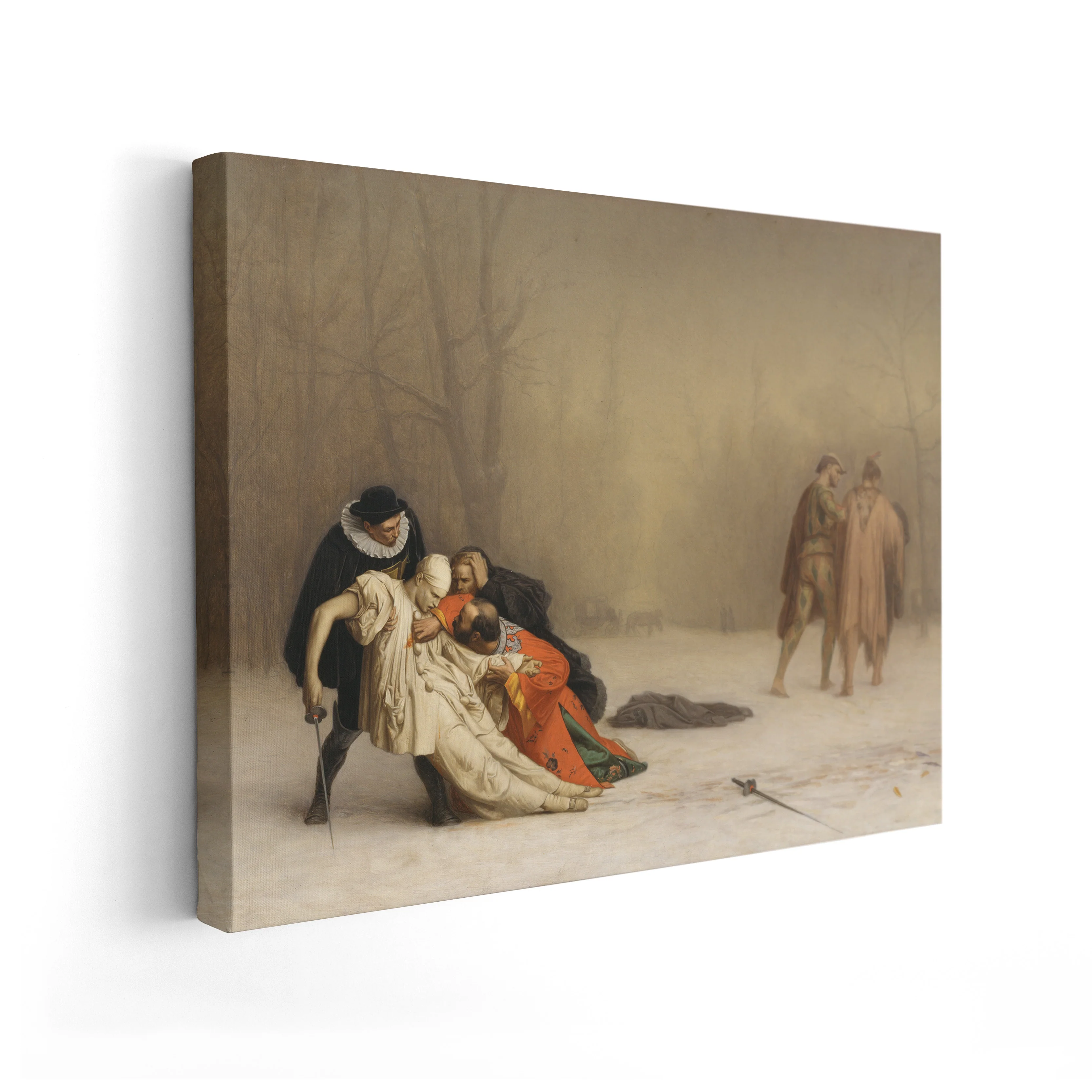
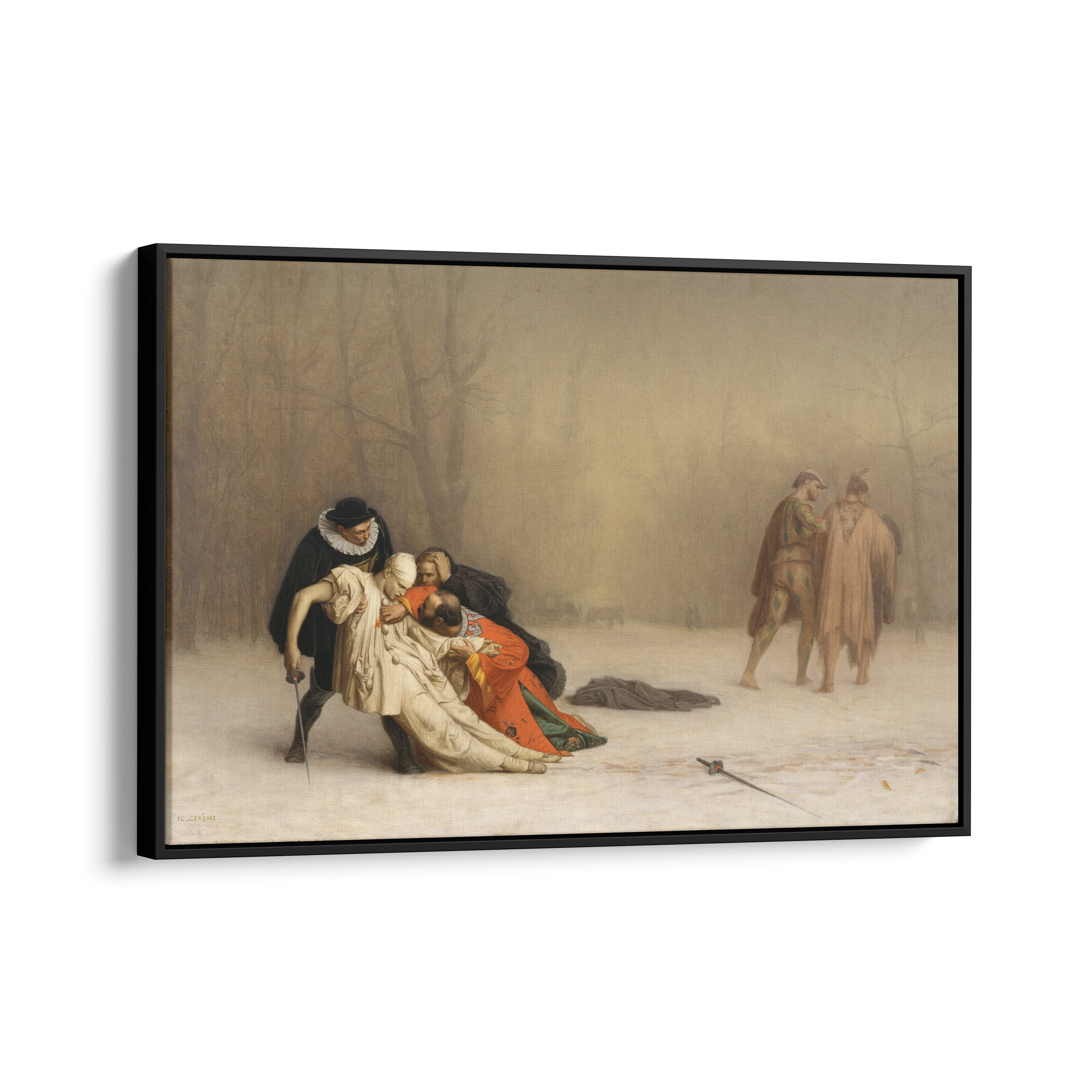
The Duel After the Masquerade (1857) by Jean-Léon Gérôme captures the chilling aftermath of a duel between masked aristocrats, set against the snowy backdrop of the Bois de Boulogne in Paris. The painting shows one wounded man, pale and limp, being supported by his seconds, while another stands in the distance, sword still in hand. The contrast between the festive costumes and the tragic consequences highlights the absurdity of honor-bound violence. Gérôme, a master of academic realism, imbues the scene with theatrical stillness and psychological tension. The clown costume of the wounded man adds a layer of irony—what began as entertainment ends in bloodshed. Through meticulous detail and haunting atmosphere, the painting critiques the performative nature of dueling and the fragility of life beneath the masks of social convention.
Product Information
Product Information
Shipping & Returns
Shipping & Returns

The Duel After the Masquerade | Jean-Léon Gerôme | 1857-59
The Duel After the Masquerade | Jean-Léon Gerôme | 1857-59
About the artwork:
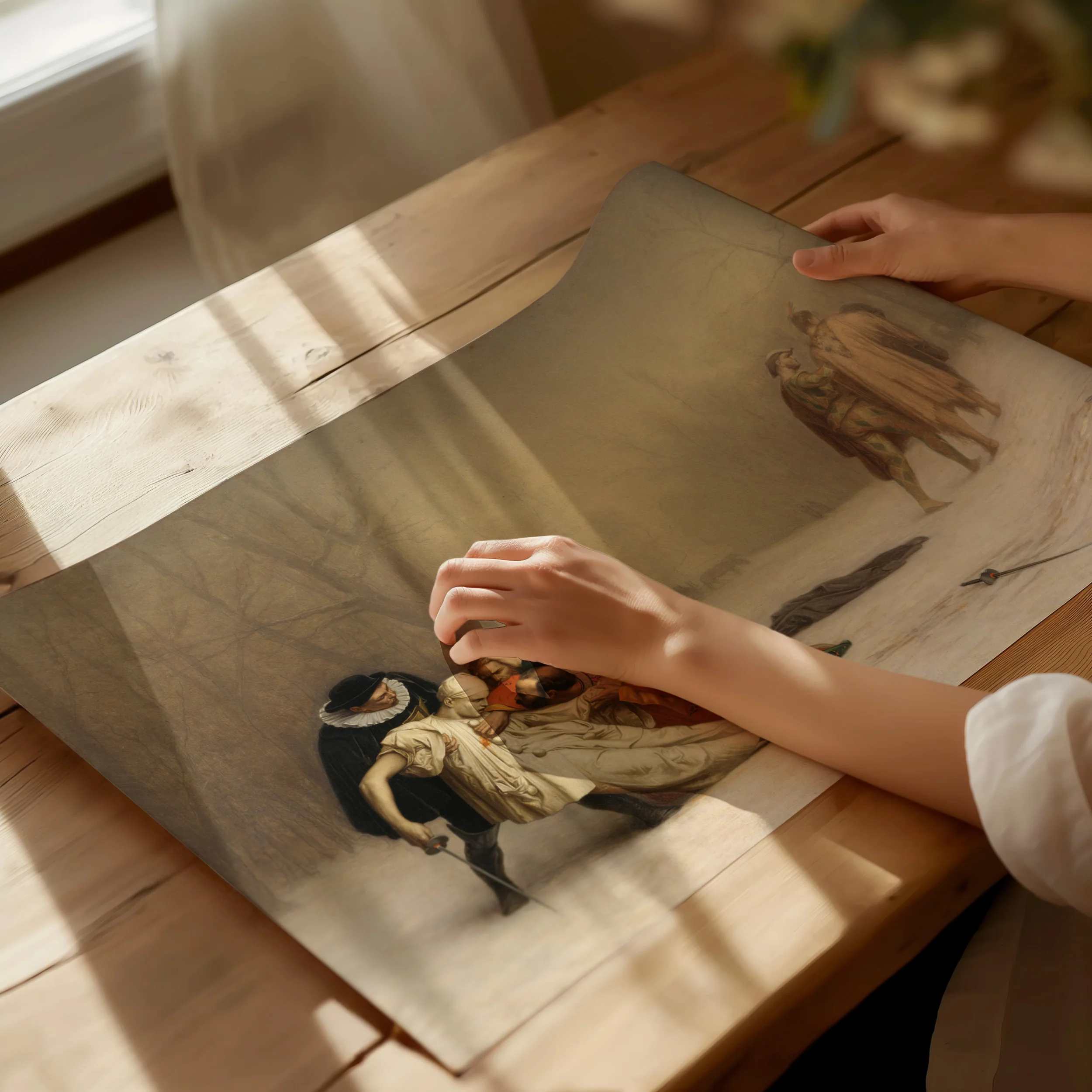
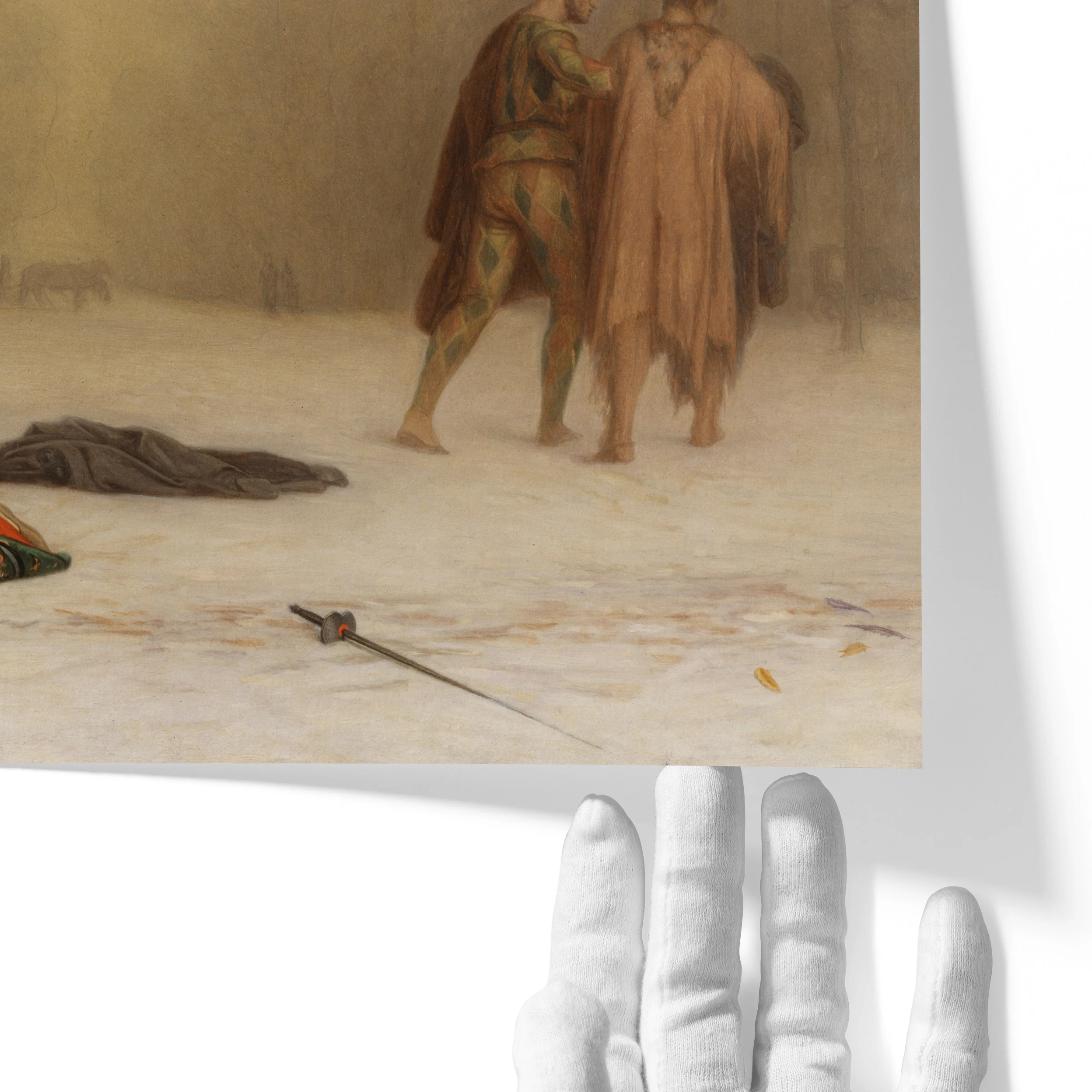
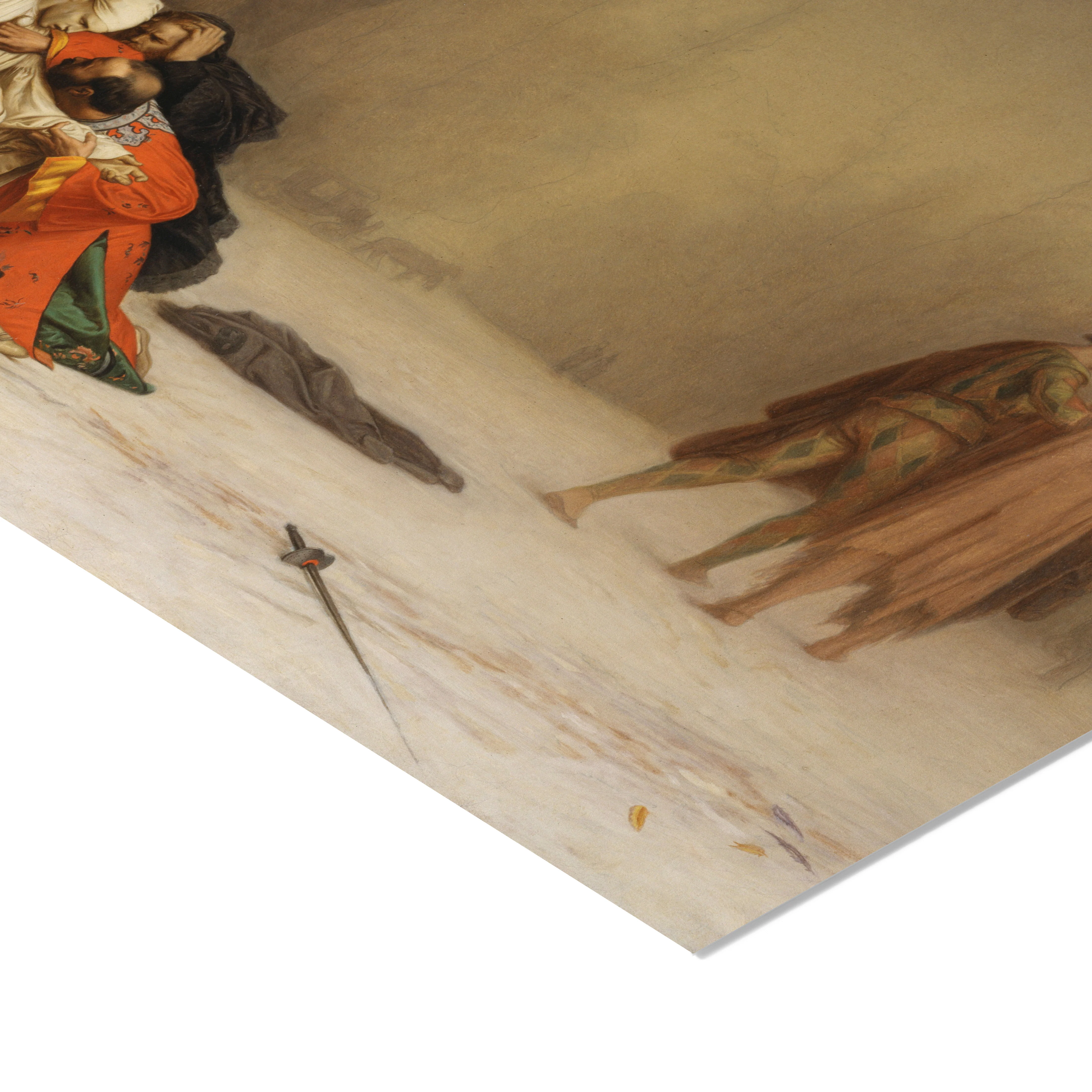
The Duel After the Masquerade (1857) by Jean-Léon Gérôme captures the chilling aftermath of a duel between masked aristocrats, set against the snowy backdrop of the Bois de Boulogne in Paris. The painting shows one wounded man, pale and limp, being supported by his seconds, while another stands in the distance, sword still in hand. The contrast between the festive costumes and the tragic consequences highlights the absurdity of honor-bound violence. Gérôme, a master of academic realism, imbues the scene with theatrical stillness and psychological tension. The clown costume of the wounded man adds a layer of irony—what began as entertainment ends in bloodshed. Through meticulous detail and haunting atmosphere, the painting critiques the performative nature of dueling and the fragility of life beneath the masks of social convention.
Original: $297.82
-70%$297.82
$89.35Product Information
Product Information
Shipping & Returns
Shipping & Returns
Description
About the artwork:
The Duel After the Masquerade (1857) by Jean-Léon Gérôme captures the chilling aftermath of a duel between masked aristocrats, set against the snowy backdrop of the Bois de Boulogne in Paris. The painting shows one wounded man, pale and limp, being supported by his seconds, while another stands in the distance, sword still in hand. The contrast between the festive costumes and the tragic consequences highlights the absurdity of honor-bound violence. Gérôme, a master of academic realism, imbues the scene with theatrical stillness and psychological tension. The clown costume of the wounded man adds a layer of irony—what began as entertainment ends in bloodshed. Through meticulous detail and haunting atmosphere, the painting critiques the performative nature of dueling and the fragility of life beneath the masks of social convention.