✨ New Arrivals Just Dropped!Explore
HomeStore

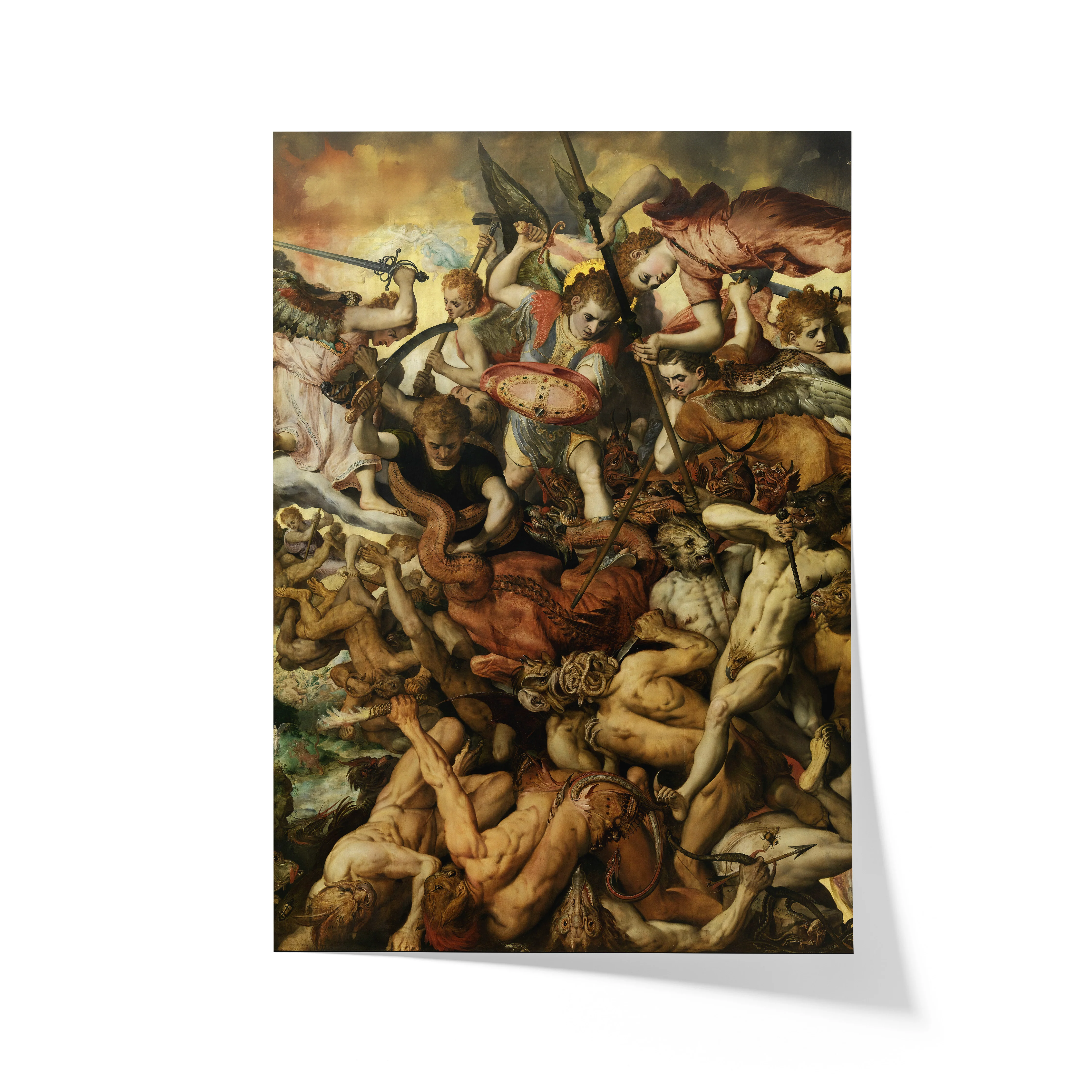
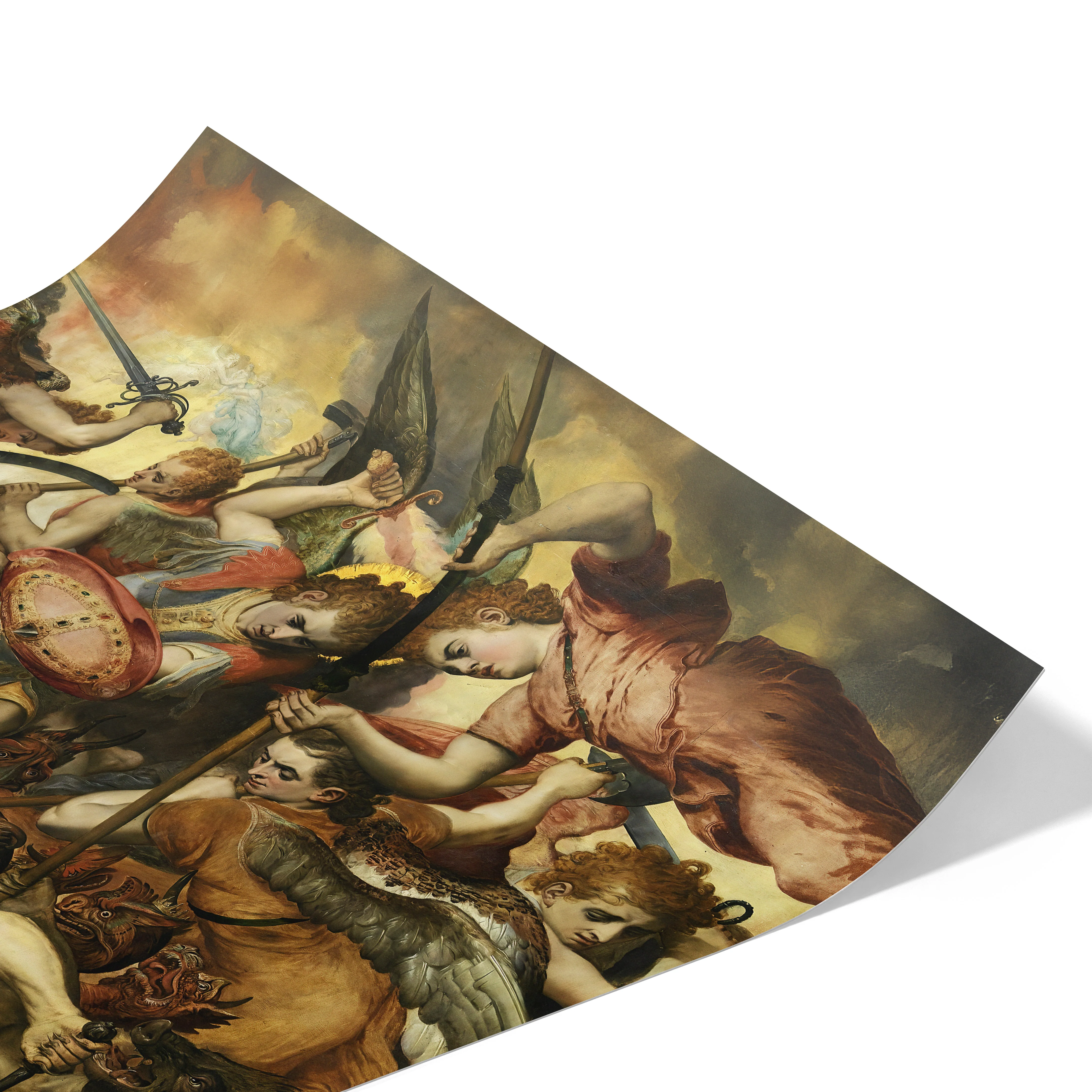
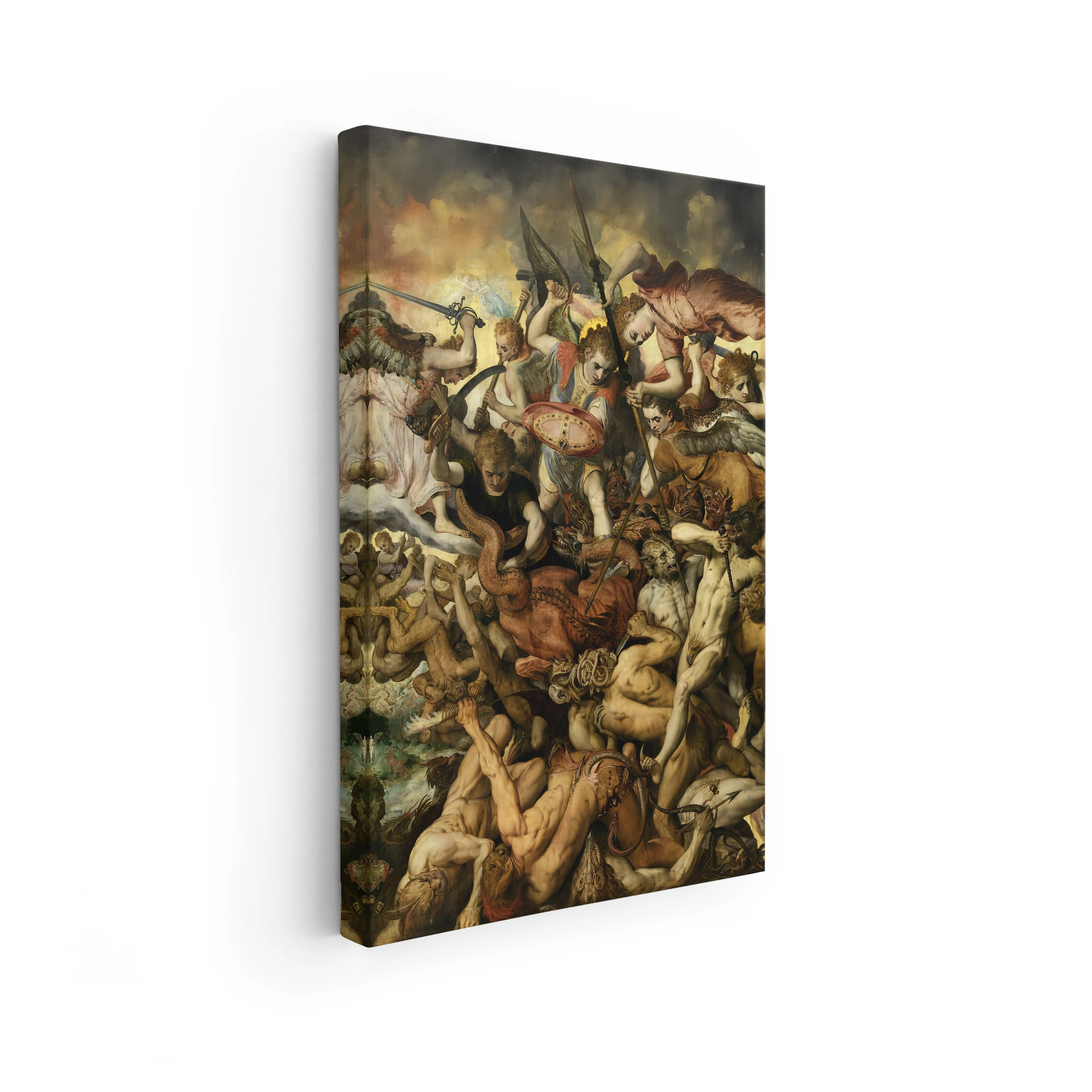
The Fall of the Rebel Angels | Frans Floris | 1554

Product image 1
Product image 2
Product image 3
Product image 4
Product image 5
Product image 6
Product image 7
Product image 8

The Fall of the Rebel Angels | Frans Floris | 1554

The Fall of the Rebel Angels | Frans Floris | 1554

About the artwork:

Frans Floris’s The Fall of the Rebel Angels (1554) is a monumental Mannerist canvas that translates the biblical struggle between good and evil into a chaotic spectacle of twisting, muscular bodies and violent movement. Inspired by Michelangelo’s Last Judgment, Floris fills the scene with densely packed figures—angels and demons locked in combat, tumbling through a turbulent sky. The composition emphasizes dynamism and exaggeration, with elongated forms and theatrical gestures reflecting the artist’s exposure to Italian Renaissance ideals. At its center, the victorious archangel Michael stands as a symbol of divine order, illuminated against the darker swarm of grotesque rebels he casts into Hell. The painting is not just a display of physical conflict but a moral allegory, illustrating the triumph of heavenly authority over pride and rebellion, while also showcasing Floris’s ambition to rival Italian masters through scale, complexity, and anatomical bravura.

Select Select Size
Select Frame Options
From $89.35

Original: $297.82

-70%
The Fall of the Rebel Angels | Frans Floris | 1554

$297.82

$89.35

Product Information

Shipping & Returns

Description

About the artwork:
Frans Floris’s The Fall of the Rebel Angels (1554) is a monumental Mannerist canvas that translates the biblical struggle between good and evil into a chaotic spectacle of twisting, muscular bodies and violent movement. Inspired by Michelangelo’s Last Judgment, Floris fills the scene with densely packed figures—angels and demons locked in combat, tumbling through a turbulent sky. The composition emphasizes dynamism and exaggeration, with elongated forms and theatrical gestures reflecting the artist’s exposure to Italian Renaissance ideals. At its center, the victorious archangel Michael stands as a symbol of divine order, illuminated against the darker swarm of grotesque rebels he casts into Hell. The painting is not just a display of physical conflict but a moral allegory, illustrating the triumph of heavenly authority over pride and rebellion, while also showcasing Floris’s ambition to rival Italian masters through scale, complexity, and anatomical bravura.