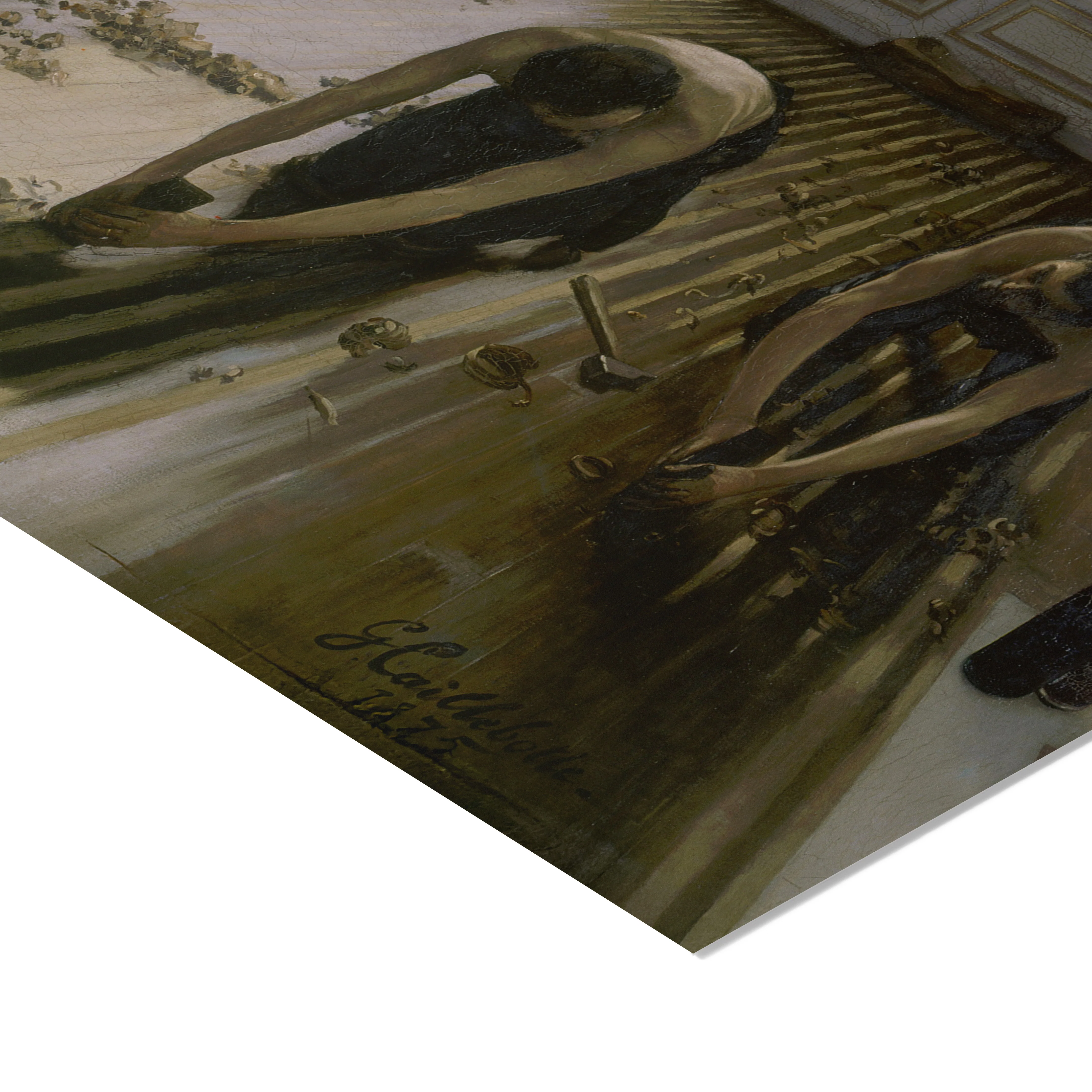
The Floor Planers (1875) by Gustave Caillebotte is a striking portrayal of modern urban labor, depicting three shirtless men smoothing a wooden floor in a Haussmann-style Parisian apartment. With its unusual subject matter and realist detail, the painting broke from the romanticized depictions of labor common at the time, instead offering a raw, almost clinical observation of physical work. The composition is carefully constructed: the diagonal light floods through the window, illuminating the workers’ muscles and highlighting the repetitive patterns of wood shavings, while the stripped-down interior echoes the physicality and vulnerability of the figures themselves. Caillebotte’s precise technique, influenced by photography and his engineering background, merges with the impressionist interest in light and modern life. Though initially controversial for its focus on working-class men in an upper-class setting, the painting is now recognized as a powerful reflection on the dignity of labor and the quiet heroism of everyday life.