✨ New Arrivals Just Dropped!Explore
HomeStore

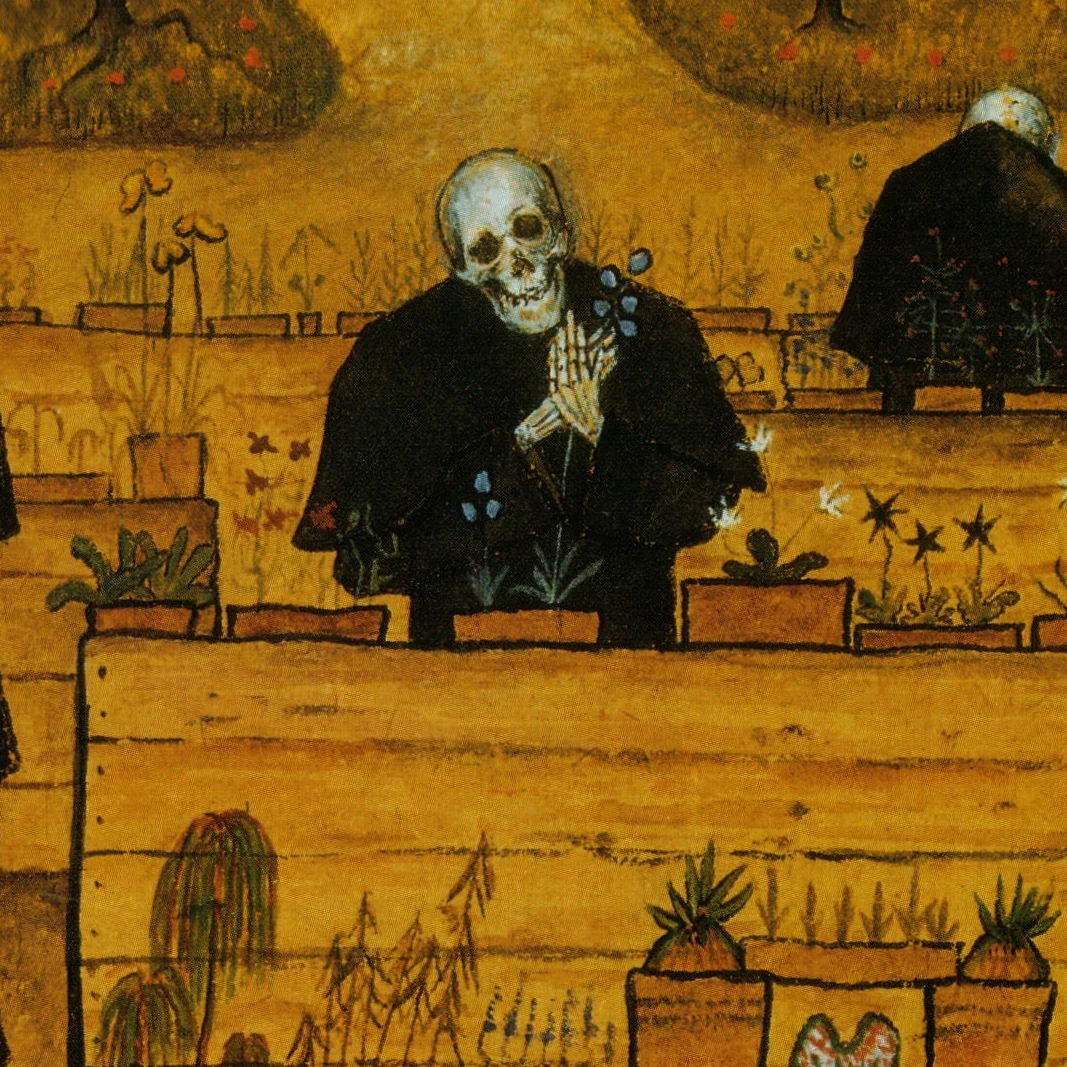
The Garden of Death | Hugo Simberg | 1896

Product image 1
Product image 2
Product image 3
Product image 4
Product image 5
Product image 6
Product image 7
Product image 8

The Garden of Death | Hugo Simberg | 1896

The Garden of Death | Hugo Simberg | 1896

About the artwork:

Hugo Simberg’s The Garden of Death from 1896 is one of the clearest examples of how Symbolist painting could make death feel strange, calm, and almost domestic rather than violent. In this small work, hooded figures associated with death are shown tending flowers with quiet care, which turns a frightening subject into a scene about transition, ritual, and spiritual continuity. That reversal is central to Simberg’s art, since he often treated supernatural or religious imagery with an unusual mix of innocence, melancholy, and simplicity. The painting’s meaning is strengthened by Simberg’s own idea that this garden was a place where the dead remain before going to heaven, which gives the image a temporary and almost compassionate vision of the afterlife rather than a final judgment. It is also relevant that Simberg returned to this subject more than once, including in a later fresco version, which suggests that this theme was not incidental but one of the key expressions of his artistic world.

Select Select Size
Select Frame Options
From $89.35

Original: $297.82

-70%
The Garden of Death | Hugo Simberg | 1896

$297.82

$89.35

Product Information

Shipping & Returns

Description

About the artwork:

Hugo Simberg’s The Garden of Death from 1896 is one of the clearest examples of how Symbolist painting could make death feel strange, calm, and almost domestic rather than violent. In this small work, hooded figures associated with death are shown tending flowers with quiet care, which turns a frightening subject into a scene about transition, ritual, and spiritual continuity. That reversal is central to Simberg’s art, since he often treated supernatural or religious imagery with an unusual mix of innocence, melancholy, and simplicity. The painting’s meaning is strengthened by Simberg’s own idea that this garden was a place where the dead remain before going to heaven, which gives the image a temporary and almost compassionate vision of the afterlife rather than a final judgment. It is also relevant that Simberg returned to this subject more than once, including in a later fresco version, which suggests that this theme was not incidental but one of the key expressions of his artistic world.