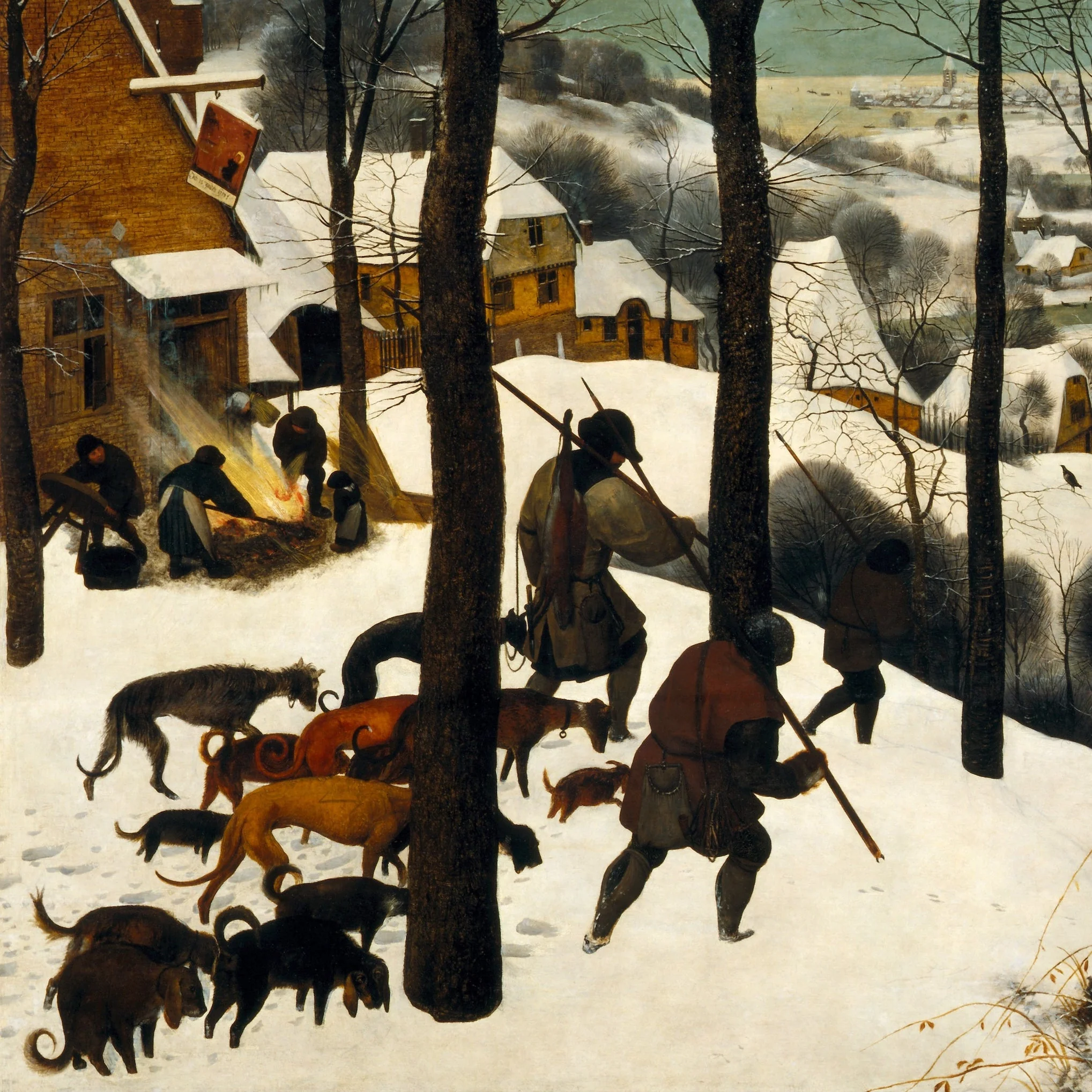
This painting portrays a serene winter landscape where three hunters, accompanied by their dogs, return to their village after an unsuccessful hunt, as suggested by their stooped postures and minimal catch. The composition leads the viewer's eye from the weary figures in the foreground to the expansive, snow-covered valley below, where villagers engage in various winter activities. Children are seen ice skating and playing on frozen ponds, while others tend to fires or traverse the icy terrain. The scene is enveloped in muted tones of white and gray, capturing the stillness and chill of winter.
Bruegel's work is part of a series depicting different times of the year, with this piece representing the harshness and beauty of winter. The painting offers a glimpse into 16th-century rural life, highlighting communal resilience and the human connection to nature's cycles. The detailed depiction of everyday activities amidst a vast landscape reflects Bruegel's interest in the human condition and his ability to find the sublime in the mundane. The contrast between the hunters' fatigue and the lively village below underscores themes of survival, community, and the passage of time.