The King and the Beggar-maid | Edmund Leighton | 1898
About the artwork:
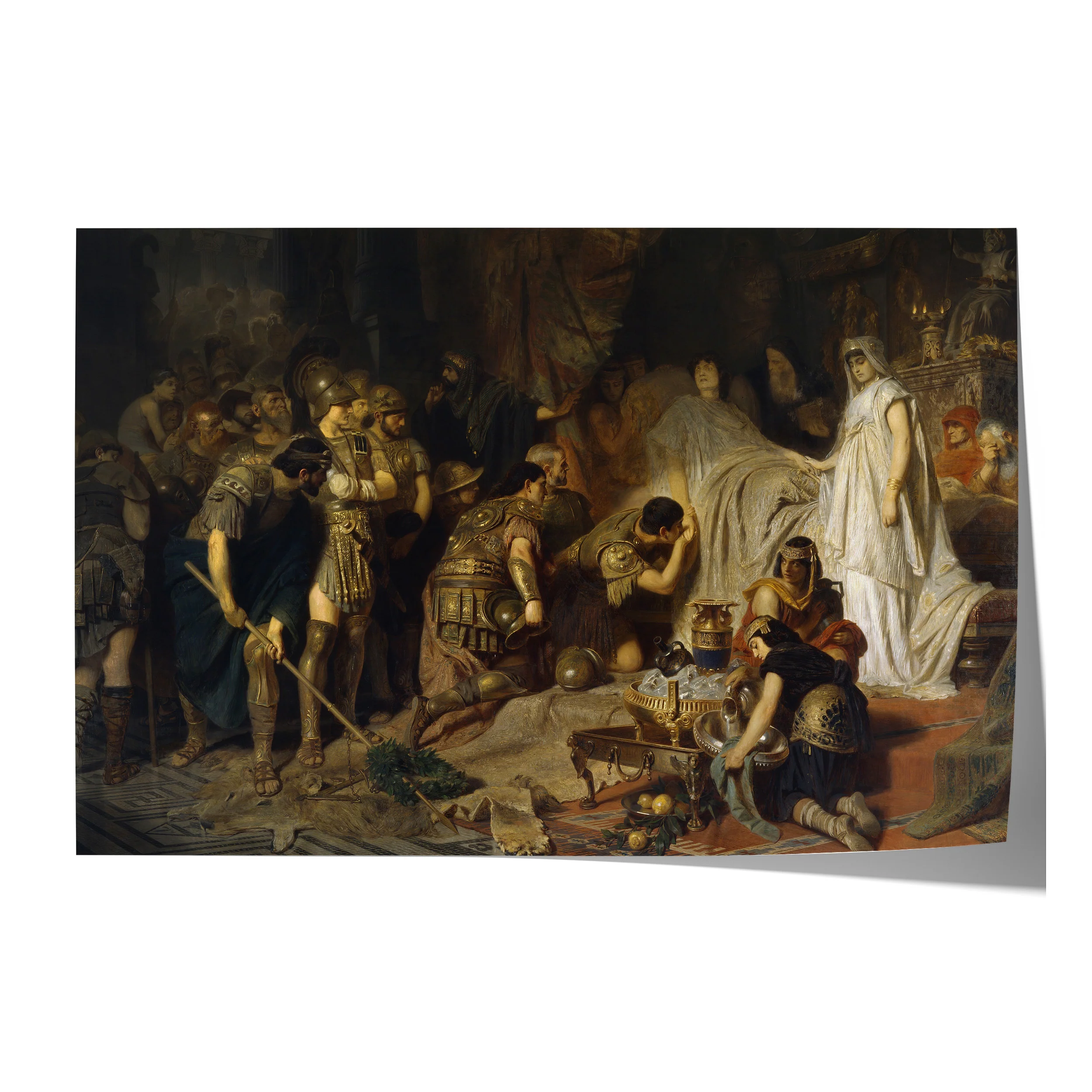
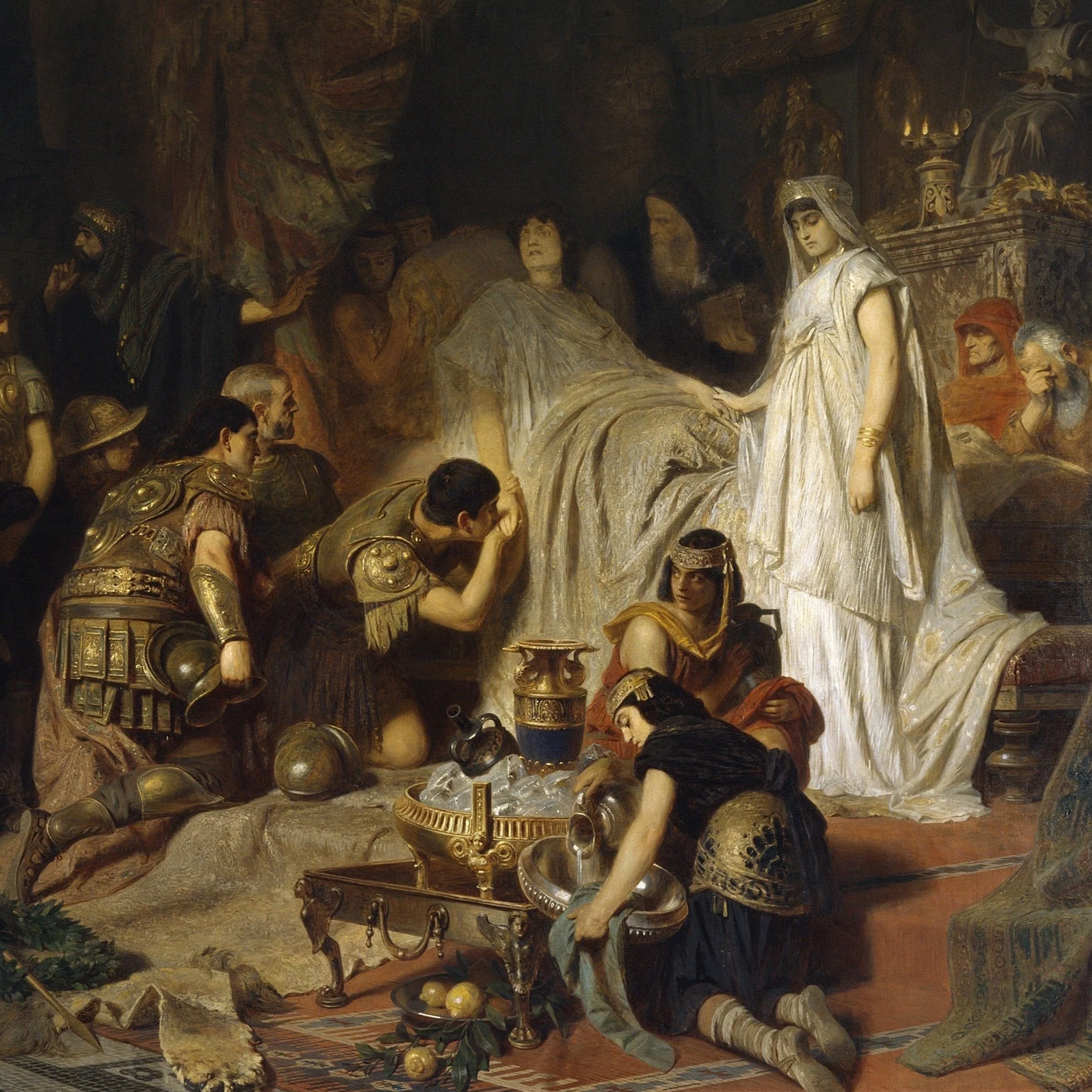
Edmund Leighton’s The King and the Beggar-maid (1898) revisits a medieval legend through the lens of Victorian romanticism, capturing the transformative moment when love transcends social boundaries. The painting depicts King Cophetua, a ruler untouched by affection, kneeling before a humble beggar girl whose quiet grace has awakened his heart. With Leighton’s characteristic precision and luminous detail, the scene becomes an idealized vision of purity, humility, and devotion—core values cherished by the late-Victorian imagination. The contrast between the king’s opulent armor and the maid’s simple attire heightens the moral and emotional tension, suggesting that true nobility lies not in birth but in the capacity to love. Bathed in soft golden light, the composition feels both theatrical and intimate, reflecting Leighton’s mastery at turning medieval myth into a mirror of his own era’s yearning for idealized beauty and moral redemption.
Product Information
Product Information
Shipping & Returns
Shipping & Returns
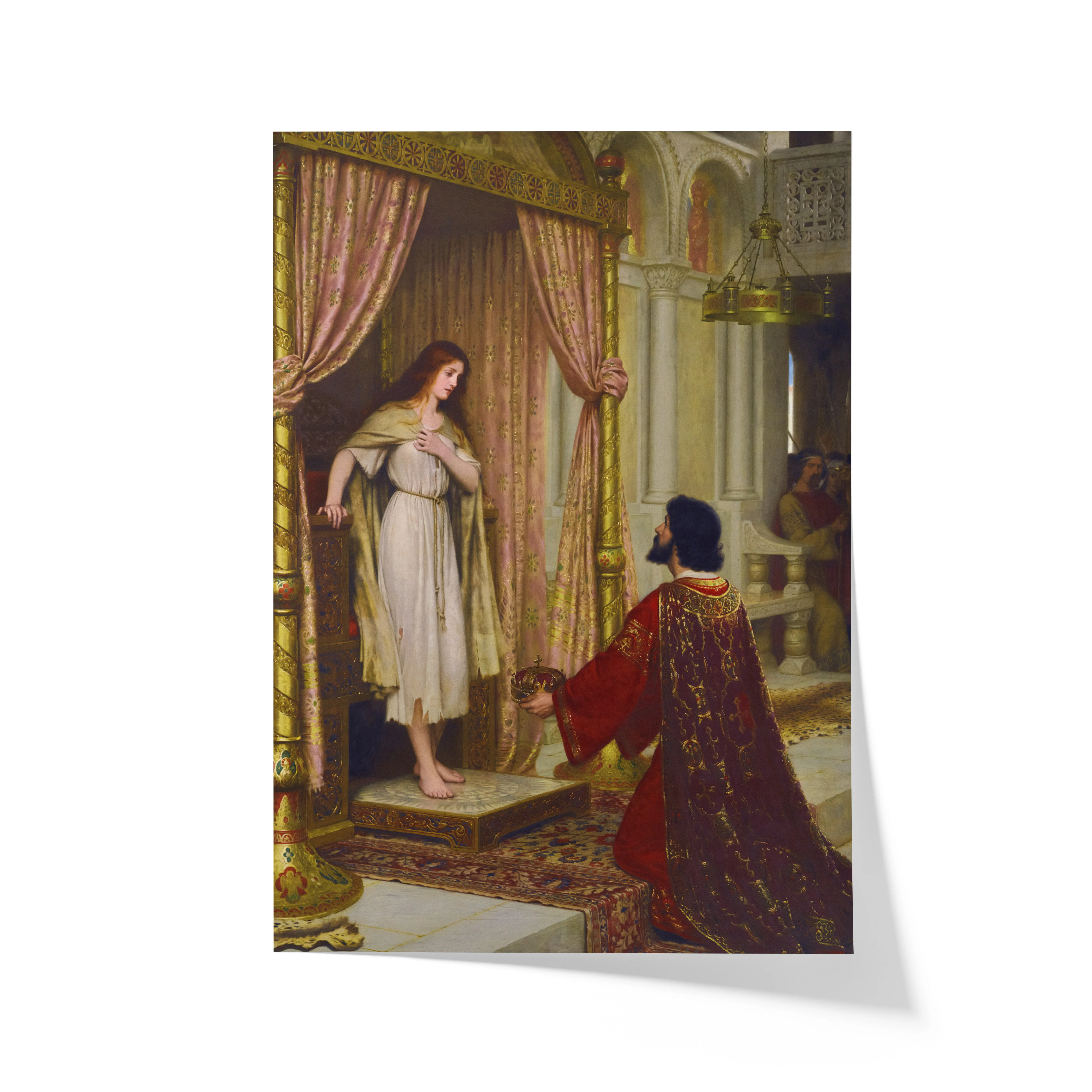


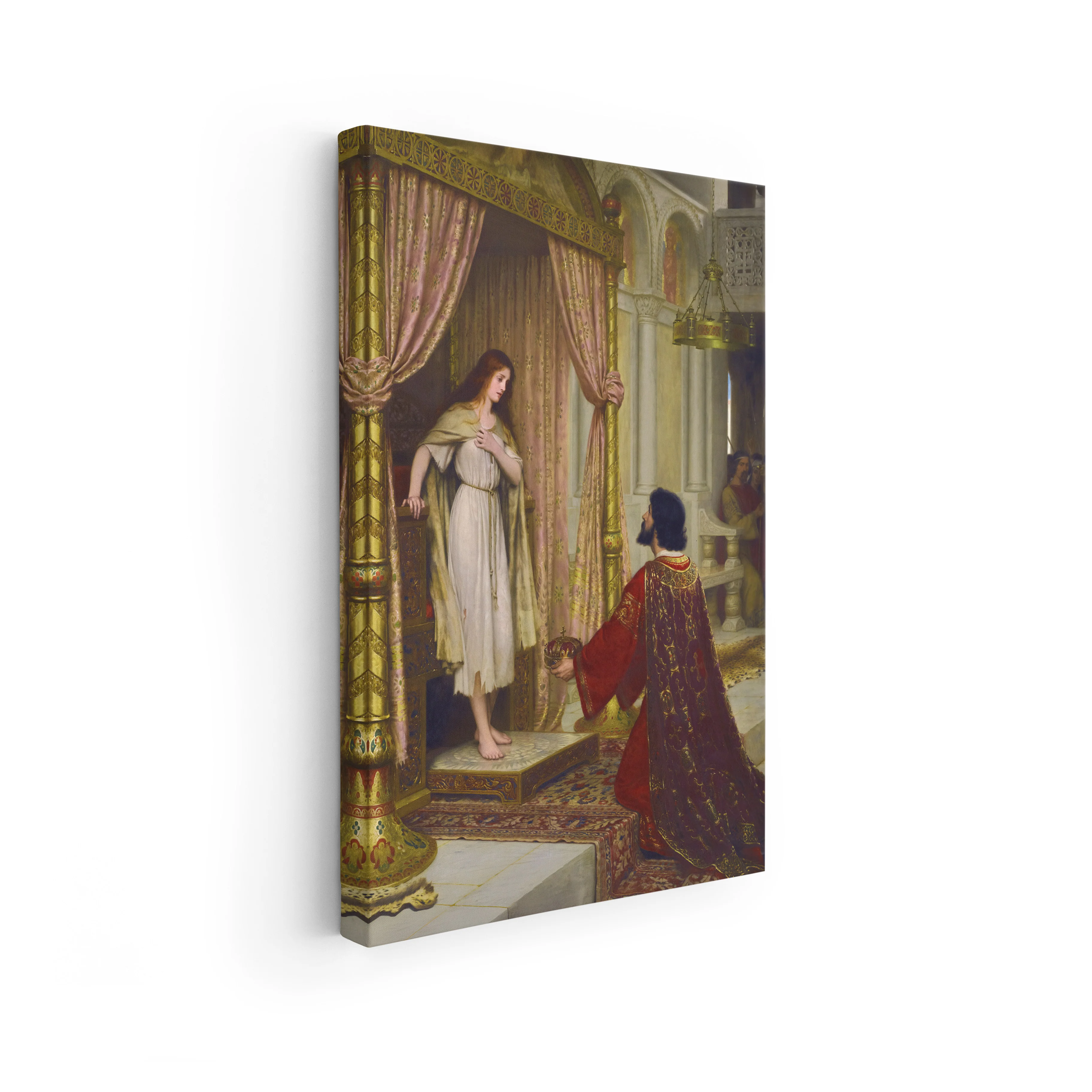

The King and the Beggar-maid | Edmund Leighton | 1898
The King and the Beggar-maid | Edmund Leighton | 1898
About the artwork:
Edmund Leighton’s The King and the Beggar-maid (1898) revisits a medieval legend through the lens of Victorian romanticism, capturing the transformative moment when love transcends social boundaries. The painting depicts King Cophetua, a ruler untouched by affection, kneeling before a humble beggar girl whose quiet grace has awakened his heart. With Leighton’s characteristic precision and luminous detail, the scene becomes an idealized vision of purity, humility, and devotion—core values cherished by the late-Victorian imagination. The contrast between the king’s opulent armor and the maid’s simple attire heightens the moral and emotional tension, suggesting that true nobility lies not in birth but in the capacity to love. Bathed in soft golden light, the composition feels both theatrical and intimate, reflecting Leighton’s mastery at turning medieval myth into a mirror of his own era’s yearning for idealized beauty and moral redemption.
Original: $297.82
-70%$297.82
$89.35Product Information
Product Information
Shipping & Returns
Shipping & Returns
Description
About the artwork:
Edmund Leighton’s The King and the Beggar-maid (1898) revisits a medieval legend through the lens of Victorian romanticism, capturing the transformative moment when love transcends social boundaries. The painting depicts King Cophetua, a ruler untouched by affection, kneeling before a humble beggar girl whose quiet grace has awakened his heart. With Leighton’s characteristic precision and luminous detail, the scene becomes an idealized vision of purity, humility, and devotion—core values cherished by the late-Victorian imagination. The contrast between the king’s opulent armor and the maid’s simple attire heightens the moral and emotional tension, suggesting that true nobility lies not in birth but in the capacity to love. Bathed in soft golden light, the composition feels both theatrical and intimate, reflecting Leighton’s mastery at turning medieval myth into a mirror of his own era’s yearning for idealized beauty and moral redemption.