The Last Supper | Chen Yuandu | 1938
About the artwork:
Painted in 1938 by Chen Yuandu, The Last Supper reinterprets the iconic Christian scene through a distinctly Chinese lens. Christ and his disciples, portrayed with Asian features and Ming-style clothing, sit around a square table in a traditional Chinese interior, with only two loaves and a cup before them. Created within the context of Fu Jen Catholic University’s mission to sinicize Christian art, the painting blends theological symbolism with local aesthetics. It stands today as a pioneering work that bridges East and West, proving that sacred narratives can transcend cultural boundaries without losing their meaning.
Product Information
Product Information
Shipping & Returns
Shipping & Returns


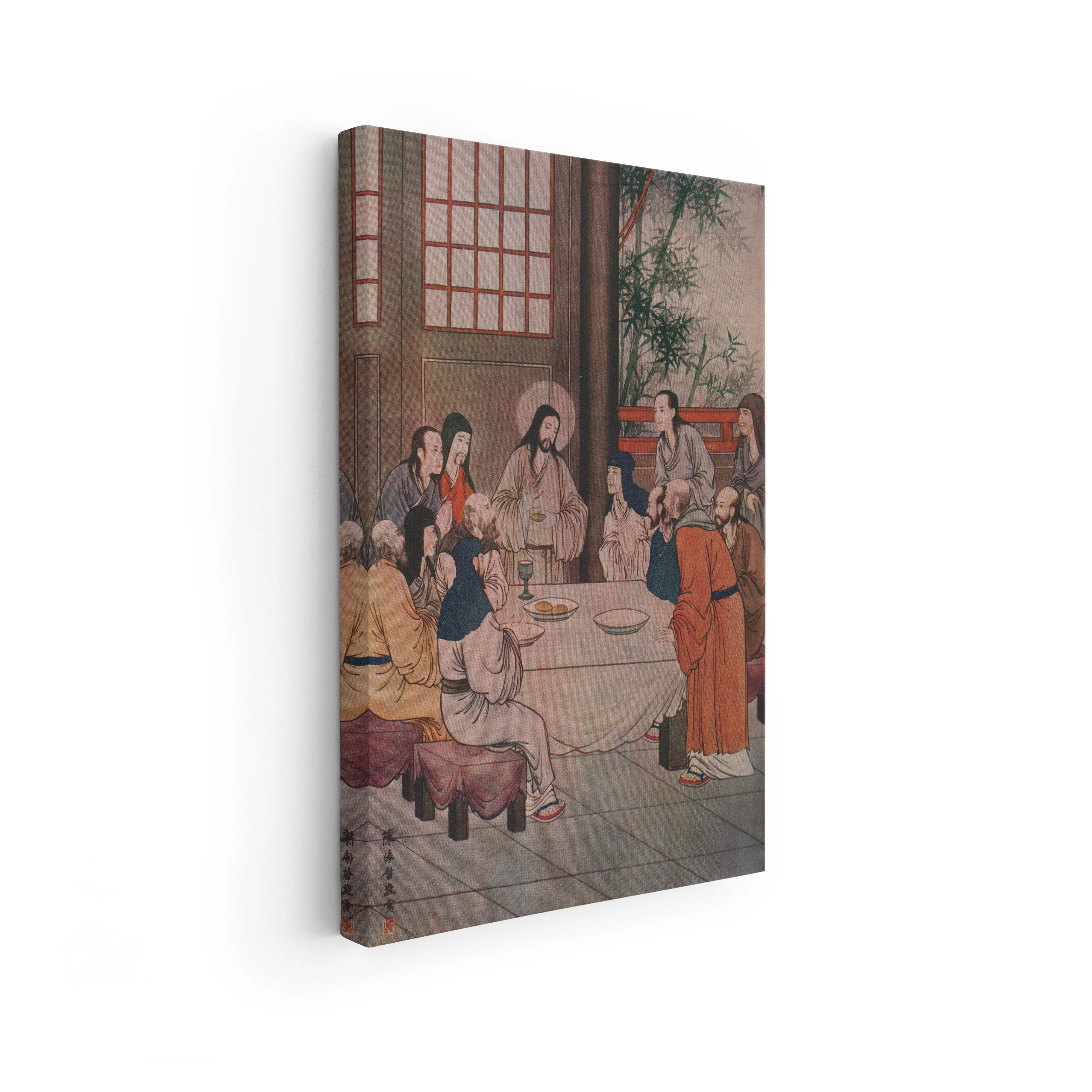

The Last Supper | Chen Yuandu | 1938
The Last Supper | Chen Yuandu | 1938
About the artwork:
Painted in 1938 by Chen Yuandu, The Last Supper reinterprets the iconic Christian scene through a distinctly Chinese lens. Christ and his disciples, portrayed with Asian features and Ming-style clothing, sit around a square table in a traditional Chinese interior, with only two loaves and a cup before them. Created within the context of Fu Jen Catholic University’s mission to sinicize Christian art, the painting blends theological symbolism with local aesthetics. It stands today as a pioneering work that bridges East and West, proving that sacred narratives can transcend cultural boundaries without losing their meaning.
Original: $297.82
-70%$297.82
$89.35Product Information
Product Information
Shipping & Returns
Shipping & Returns
Description
About the artwork:
Painted in 1938 by Chen Yuandu, The Last Supper reinterprets the iconic Christian scene through a distinctly Chinese lens. Christ and his disciples, portrayed with Asian features and Ming-style clothing, sit around a square table in a traditional Chinese interior, with only two loaves and a cup before them. Created within the context of Fu Jen Catholic University’s mission to sinicize Christian art, the painting blends theological symbolism with local aesthetics. It stands today as a pioneering work that bridges East and West, proving that sacred narratives can transcend cultural boundaries without losing their meaning.