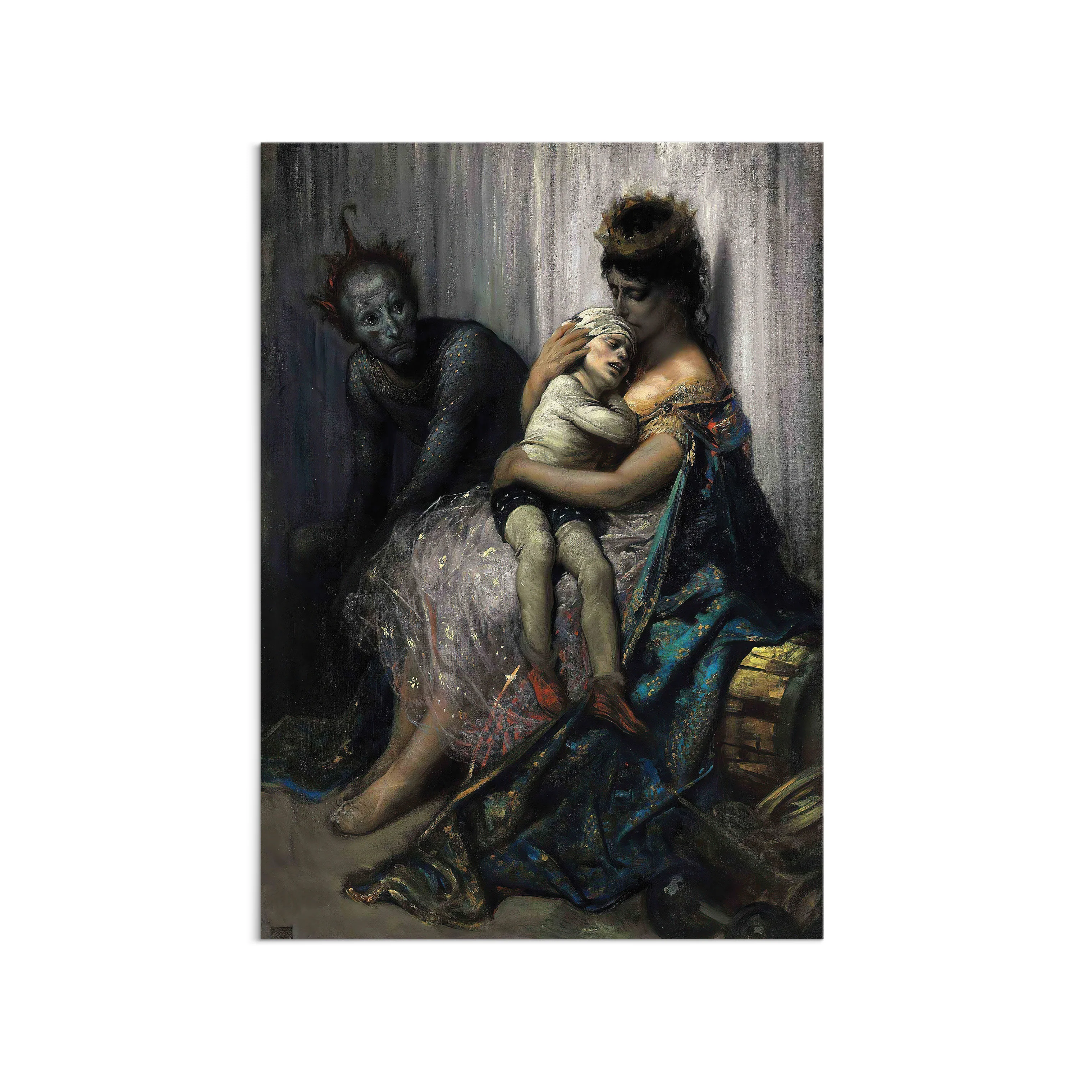
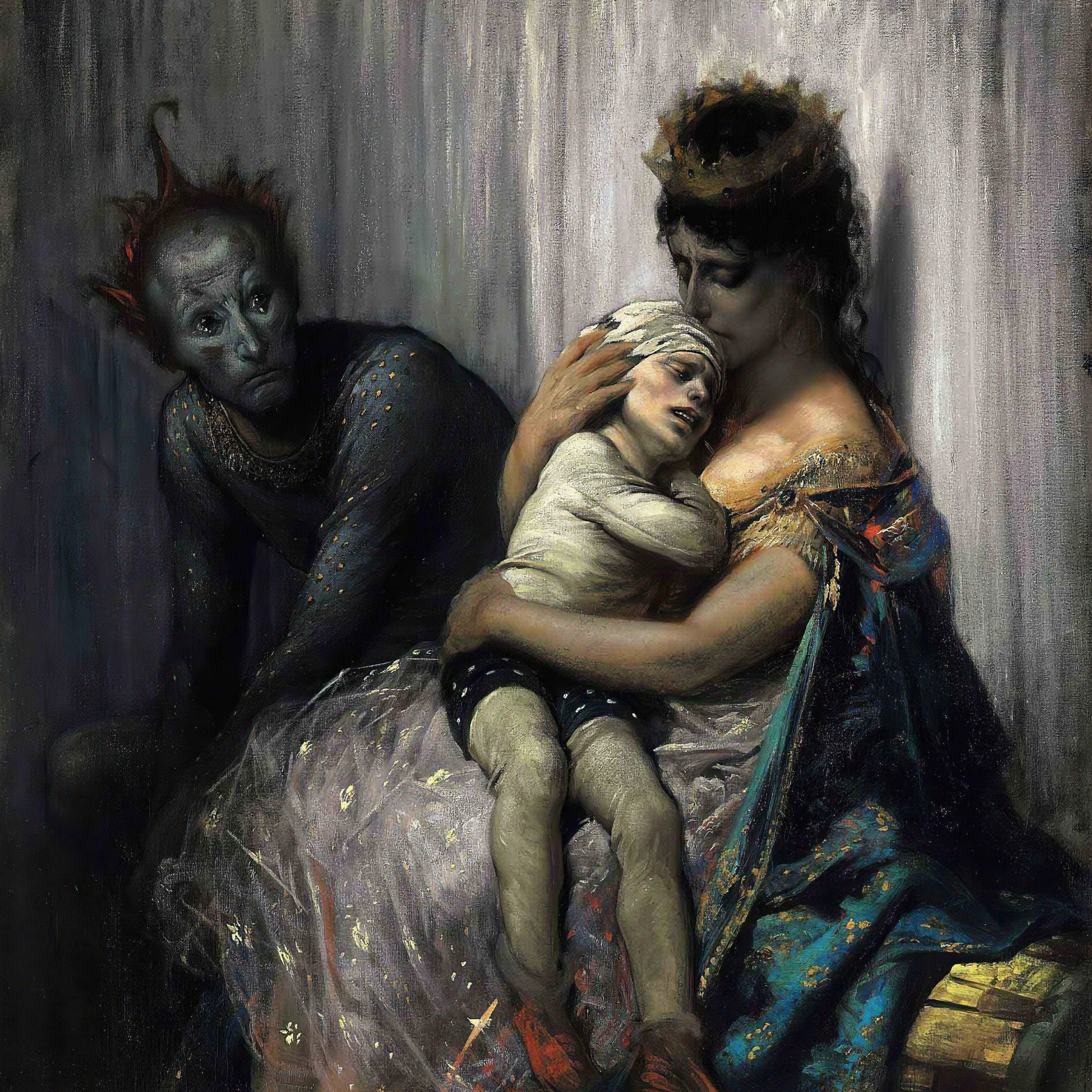
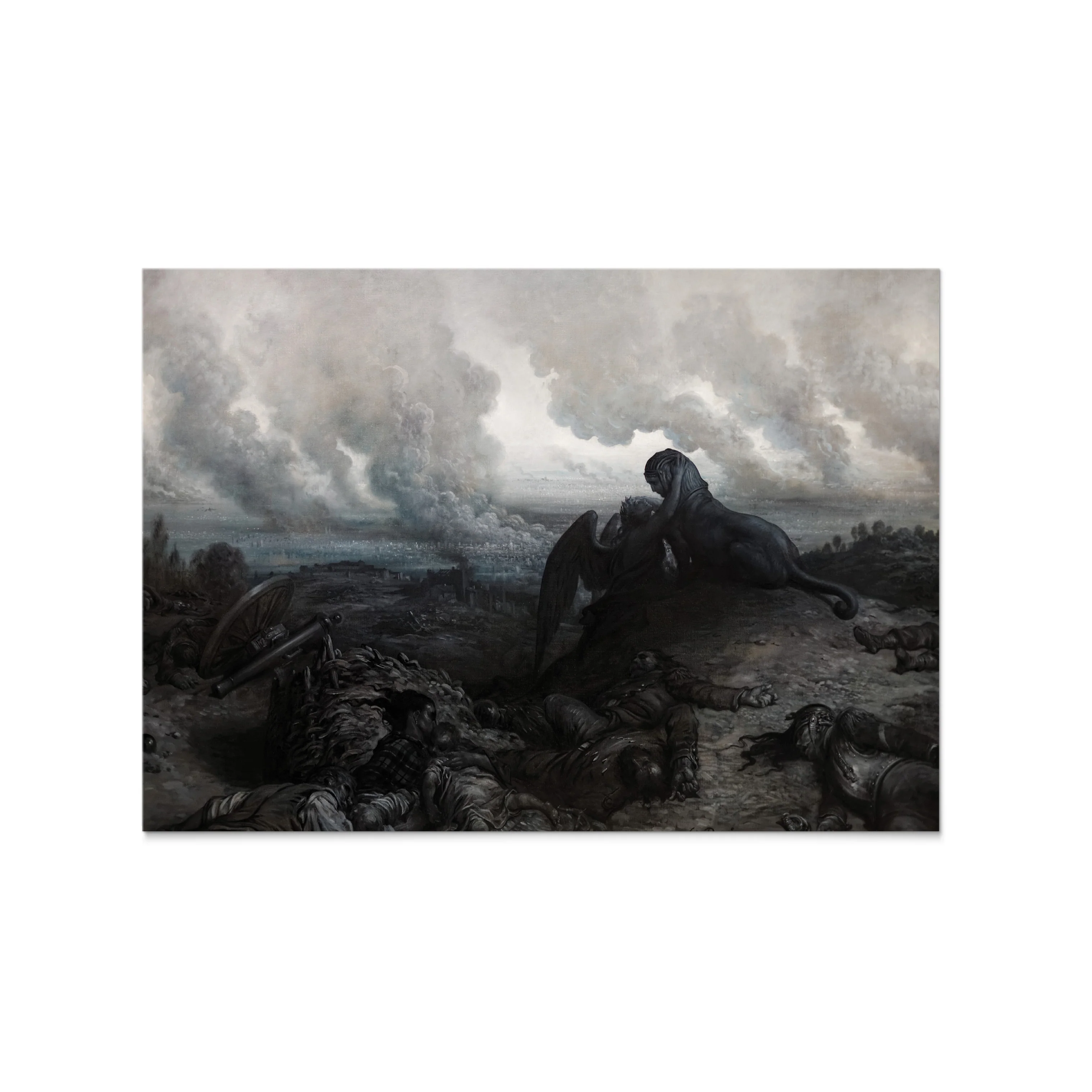
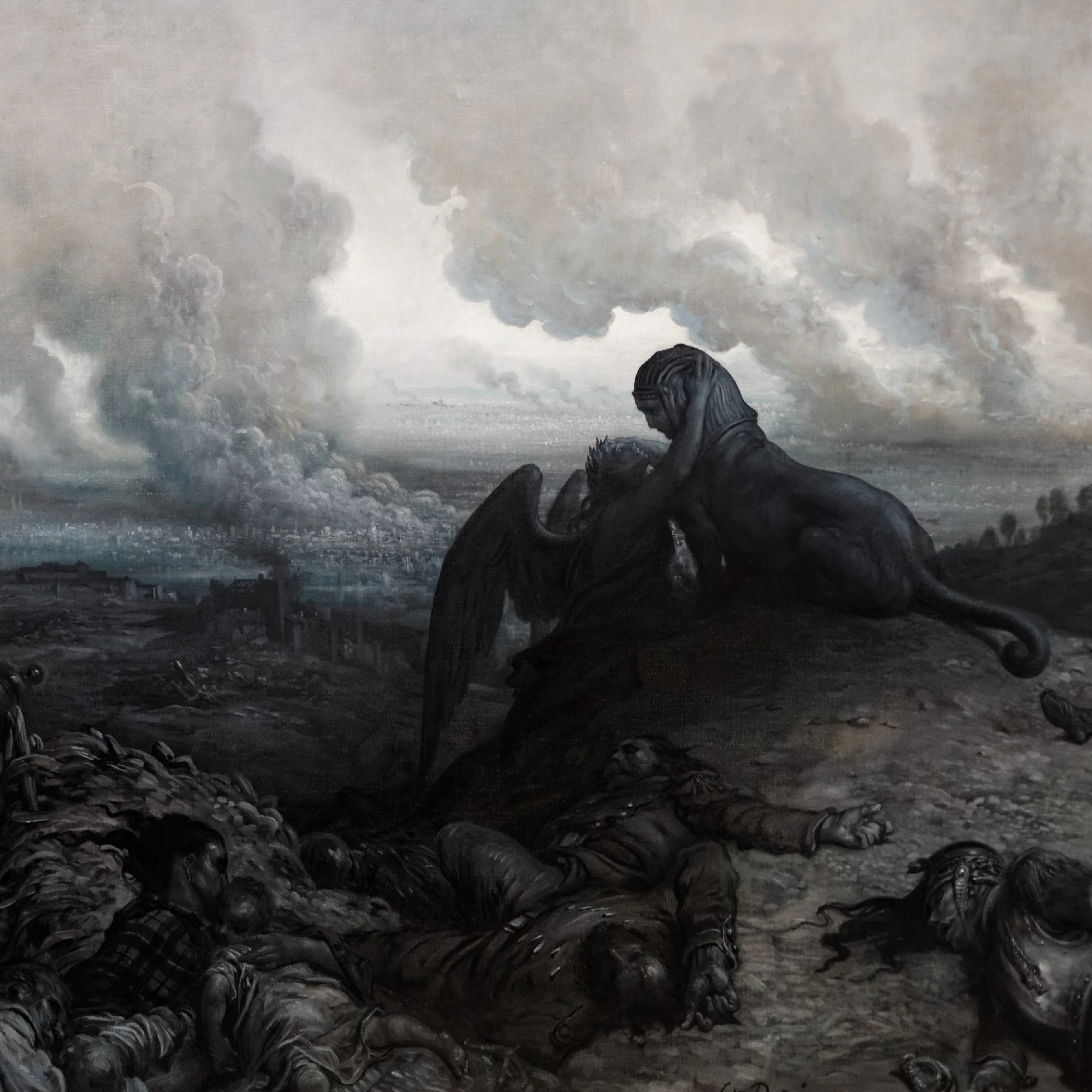
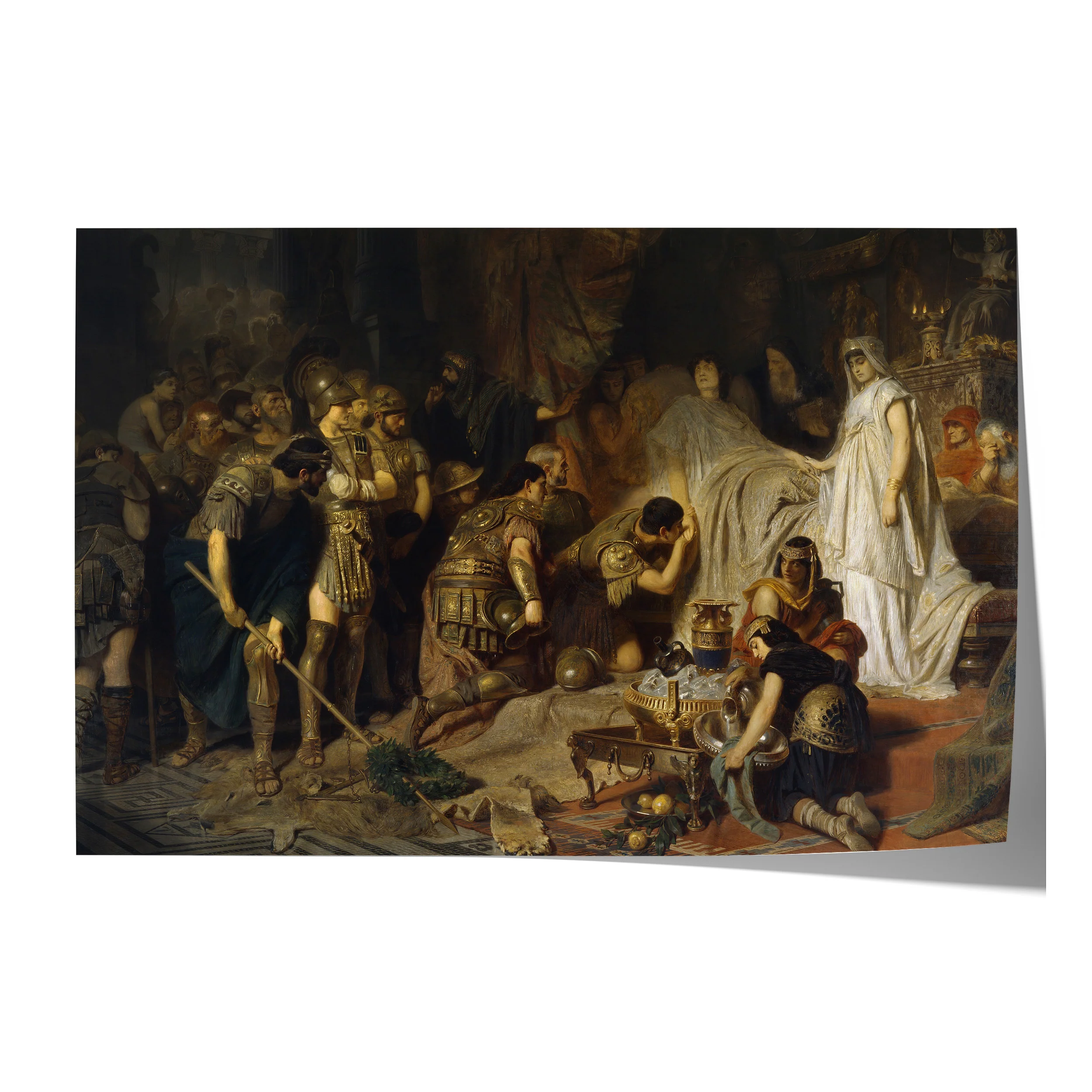
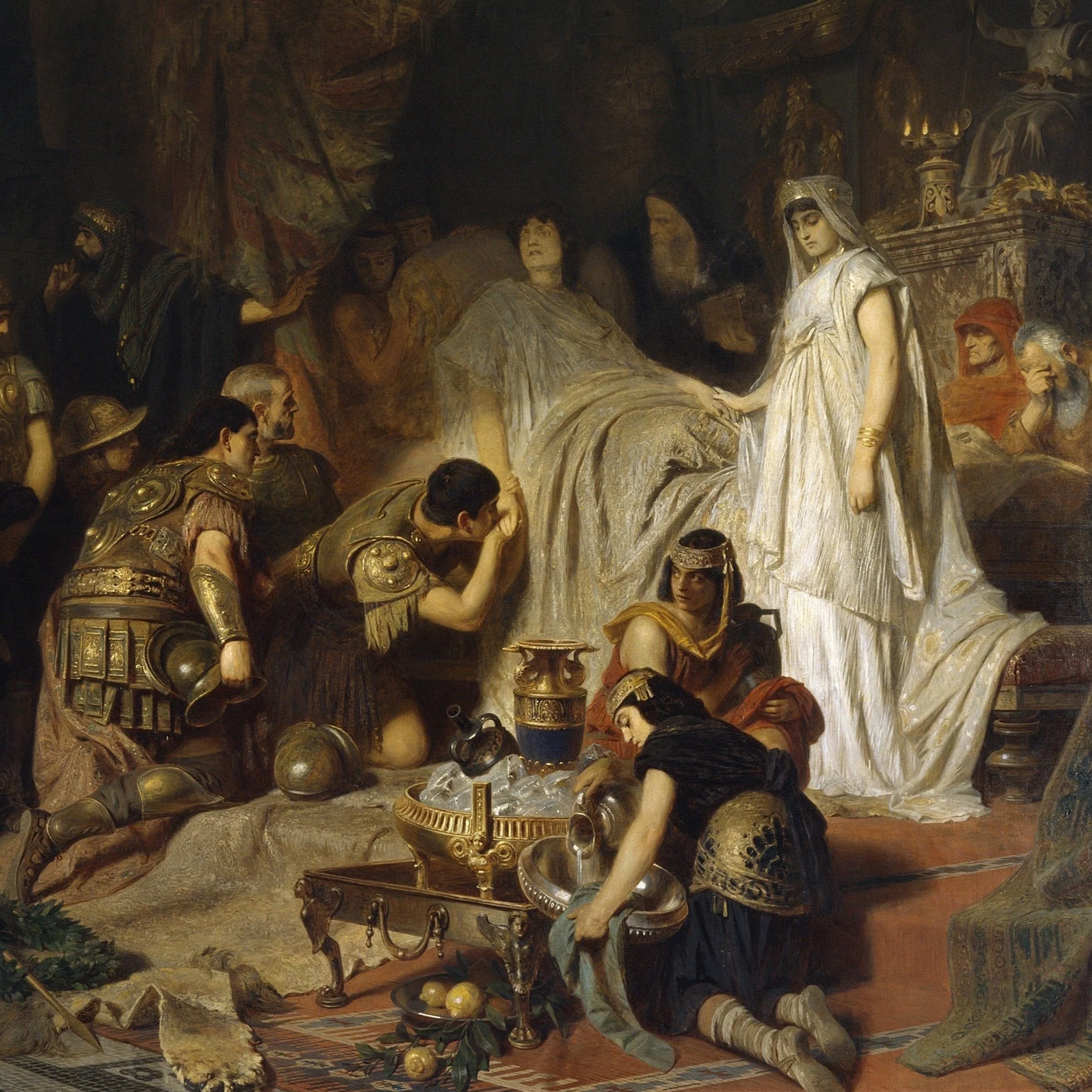
The Lunatic of Etretat | Hugues Merle | 1871
About the artwork:
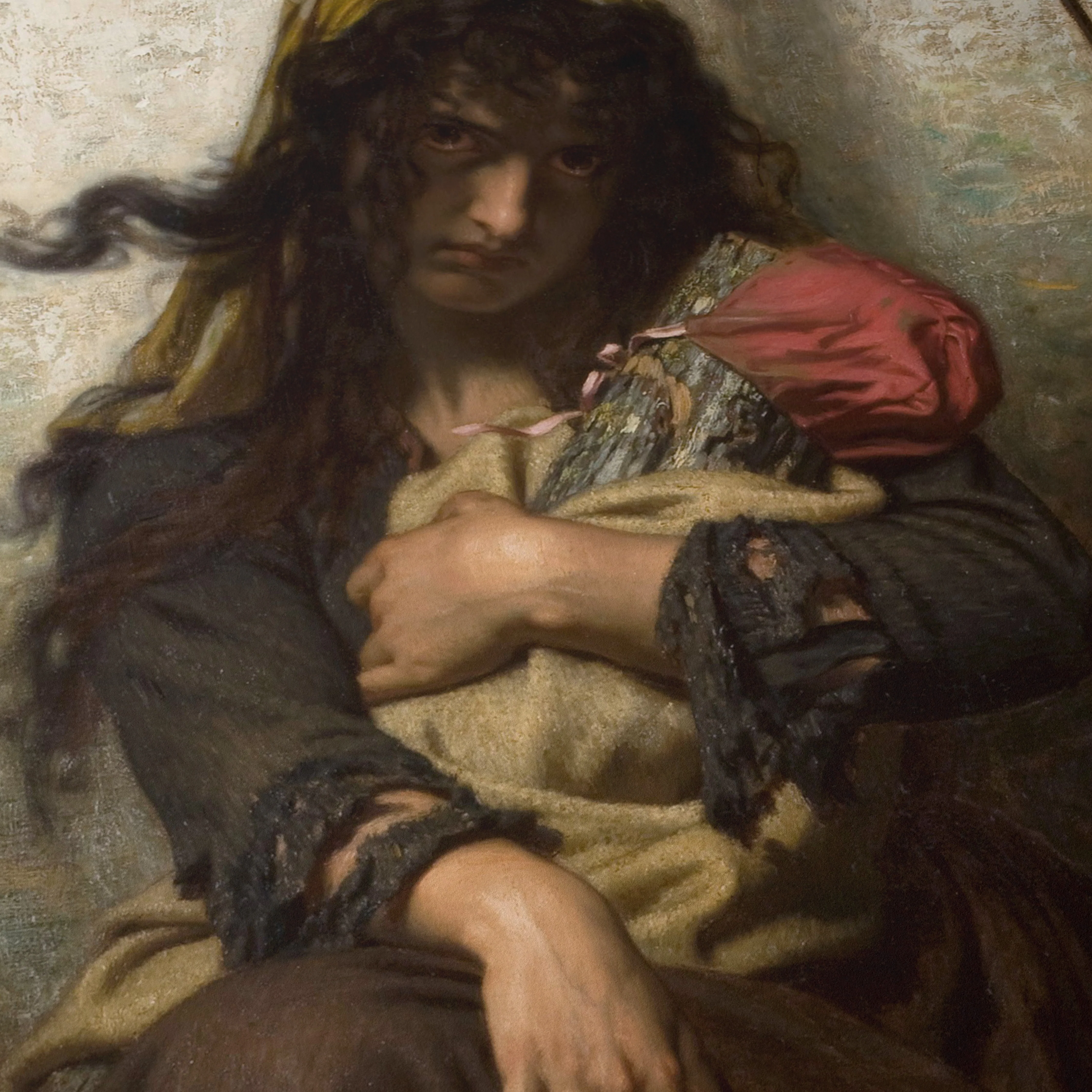
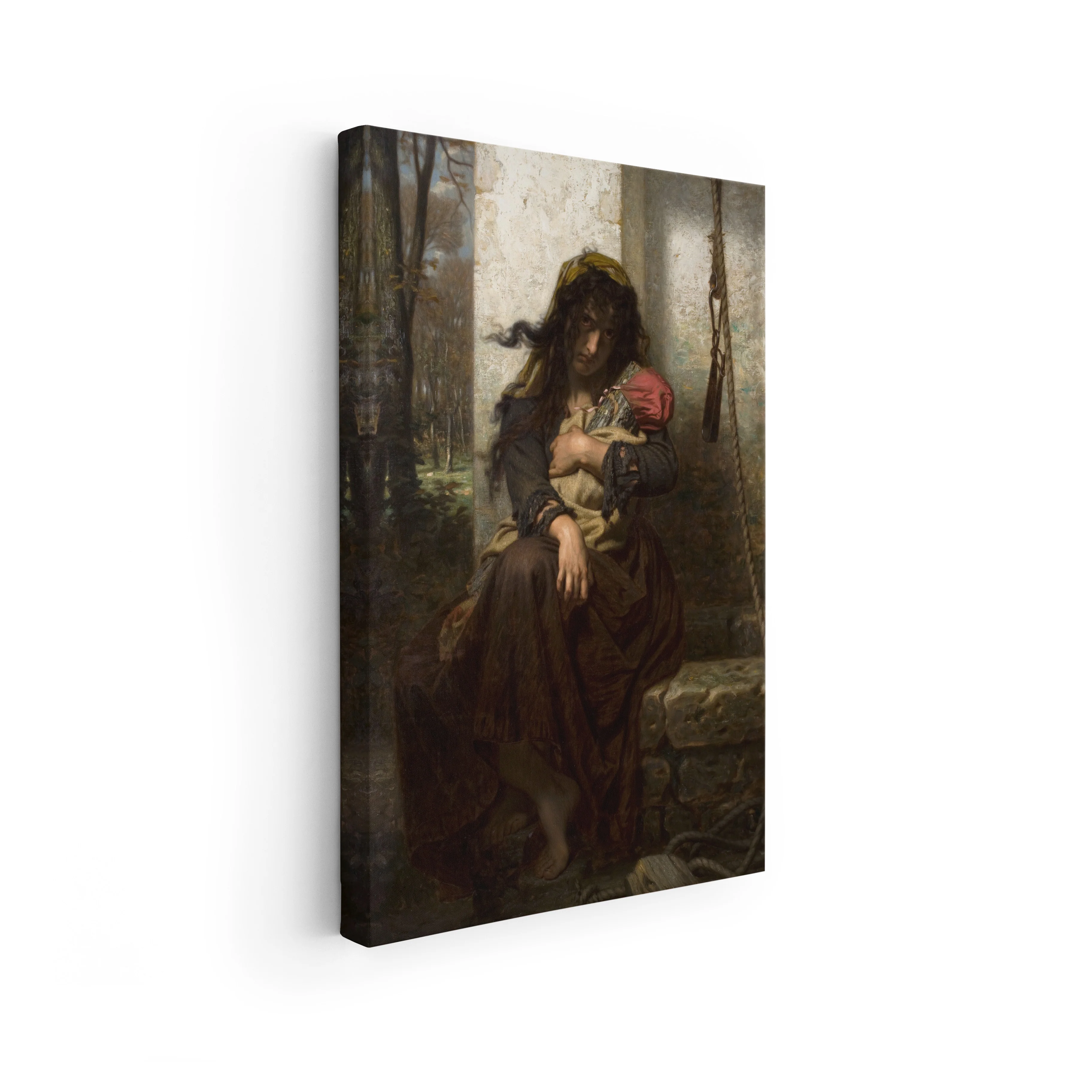
"The Lunatic of Étretat" (1871) by Hugues Merle is a haunting portrayal of mental anguish and isolation, set against the raw, natural landscape of Étretat. Merle, known for his emotive and moralizing style, captures the figure with an intense realism that reveals both vulnerability and disconnection from society. The woman’s expression and posture convey a sense of despair, and her tattered clothing and disheveled appearance emphasize her marginalization. The coastal backdrop—depicted with a subdued, almost melancholic palette—underscores her solitude, linking her inner turmoil to the untamed forces of nature. Merle’s detailed attention to the textures and shadows creates a powerful contrast between the physical beauty of the landscape and the tragic condition of the subject, suggesting a narrative of lost sanity in the face of overpowering forces, both natural and societal. Through this piece, Merle invites the viewer to confront the stigmatization of mental illness and evokes empathy for the often unseen suffering of the marginalized.
Product Information
Product Information
Shipping & Returns
Shipping & Returns




The Lunatic of Etretat | Hugues Merle | 1871
The Lunatic of Etretat | Hugues Merle | 1871
About the artwork:
"The Lunatic of Étretat" (1871) by Hugues Merle is a haunting portrayal of mental anguish and isolation, set against the raw, natural landscape of Étretat. Merle, known for his emotive and moralizing style, captures the figure with an intense realism that reveals both vulnerability and disconnection from society. The woman’s expression and posture convey a sense of despair, and her tattered clothing and disheveled appearance emphasize her marginalization. The coastal backdrop—depicted with a subdued, almost melancholic palette—underscores her solitude, linking her inner turmoil to the untamed forces of nature. Merle’s detailed attention to the textures and shadows creates a powerful contrast between the physical beauty of the landscape and the tragic condition of the subject, suggesting a narrative of lost sanity in the face of overpowering forces, both natural and societal. Through this piece, Merle invites the viewer to confront the stigmatization of mental illness and evokes empathy for the often unseen suffering of the marginalized.
Original: $297.82
-70%$297.82
$89.35Product Information
Product Information
Shipping & Returns
Shipping & Returns
Description
About the artwork:
"The Lunatic of Étretat" (1871) by Hugues Merle is a haunting portrayal of mental anguish and isolation, set against the raw, natural landscape of Étretat. Merle, known for his emotive and moralizing style, captures the figure with an intense realism that reveals both vulnerability and disconnection from society. The woman’s expression and posture convey a sense of despair, and her tattered clothing and disheveled appearance emphasize her marginalization. The coastal backdrop—depicted with a subdued, almost melancholic palette—underscores her solitude, linking her inner turmoil to the untamed forces of nature. Merle’s detailed attention to the textures and shadows creates a powerful contrast between the physical beauty of the landscape and the tragic condition of the subject, suggesting a narrative of lost sanity in the face of overpowering forces, both natural and societal. Through this piece, Merle invites the viewer to confront the stigmatization of mental illness and evokes empathy for the often unseen suffering of the marginalized.