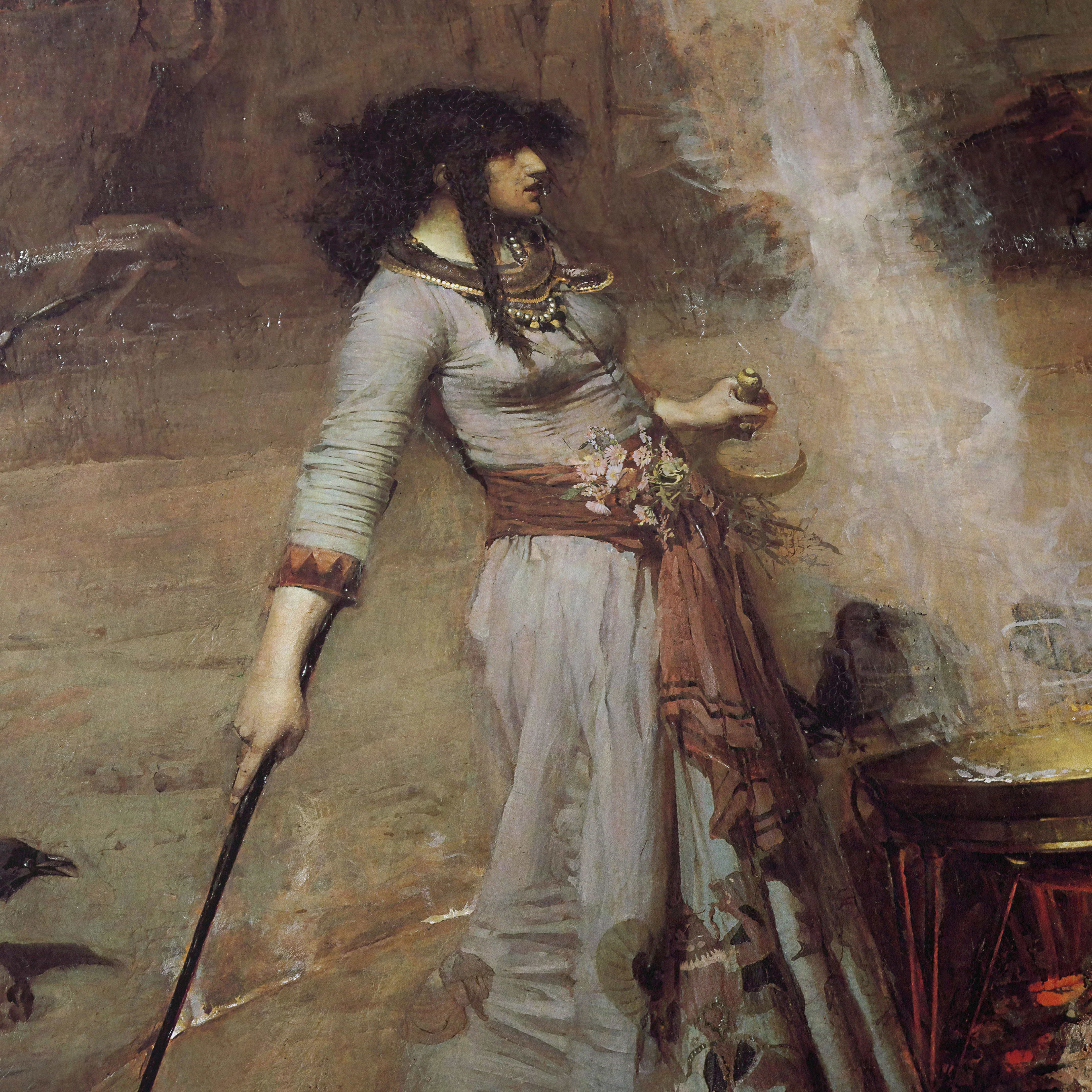
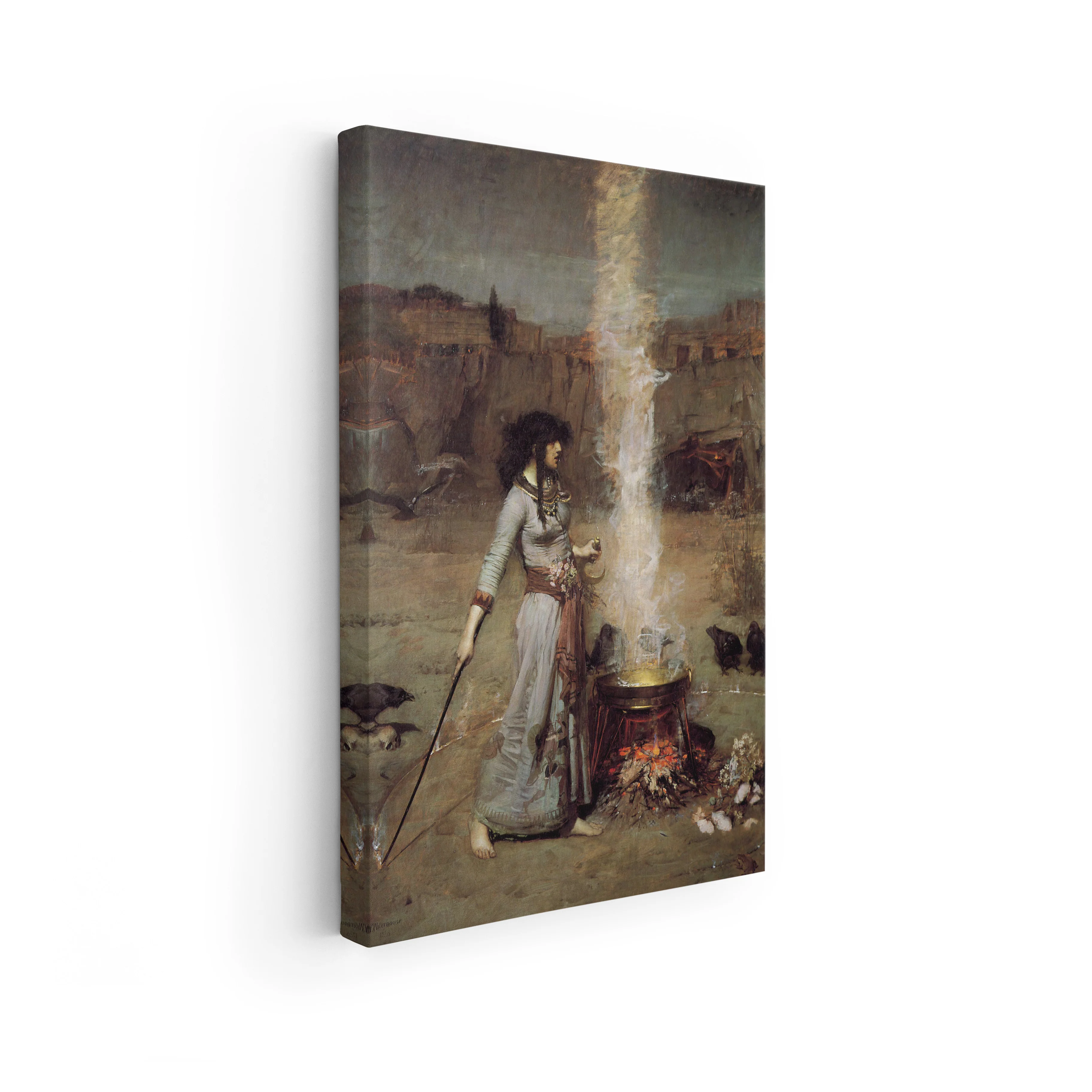
The Magic Circle by John William Waterhouse, painted in 1886, depicts a solitary female figure performing a ritual within a circle drawn on the ground, immediately establishing themes of mysticism and isolation. Waterhouse was closely associated with the later phase of the Pre-Raphaelite movement, a group of artists who favored clear detail, vivid color, and subjects drawn from literature, myth, and history as a reaction against academic painting. In this work, the woman is commonly interpreted as a witch or sorceress, not portrayed as monstrous but as calm and deliberate, which reflects late nineteenth century interest in the occult, folklore, and alternative spiritual practices. The barren landscape and subdued palette reinforce a sense of tension and control, suggesting that the magic is intentional rather than chaotic. The painting can also be read as a reflection of Victorian anxieties and fascinations, especially regarding female autonomy and hidden knowledge, making it one of Waterhouse’s most iconic explorations of myth filtered through a modern psychological lens.