The Return of the Prodigal Son | Rembrandt | 1661-69
About the artwork:
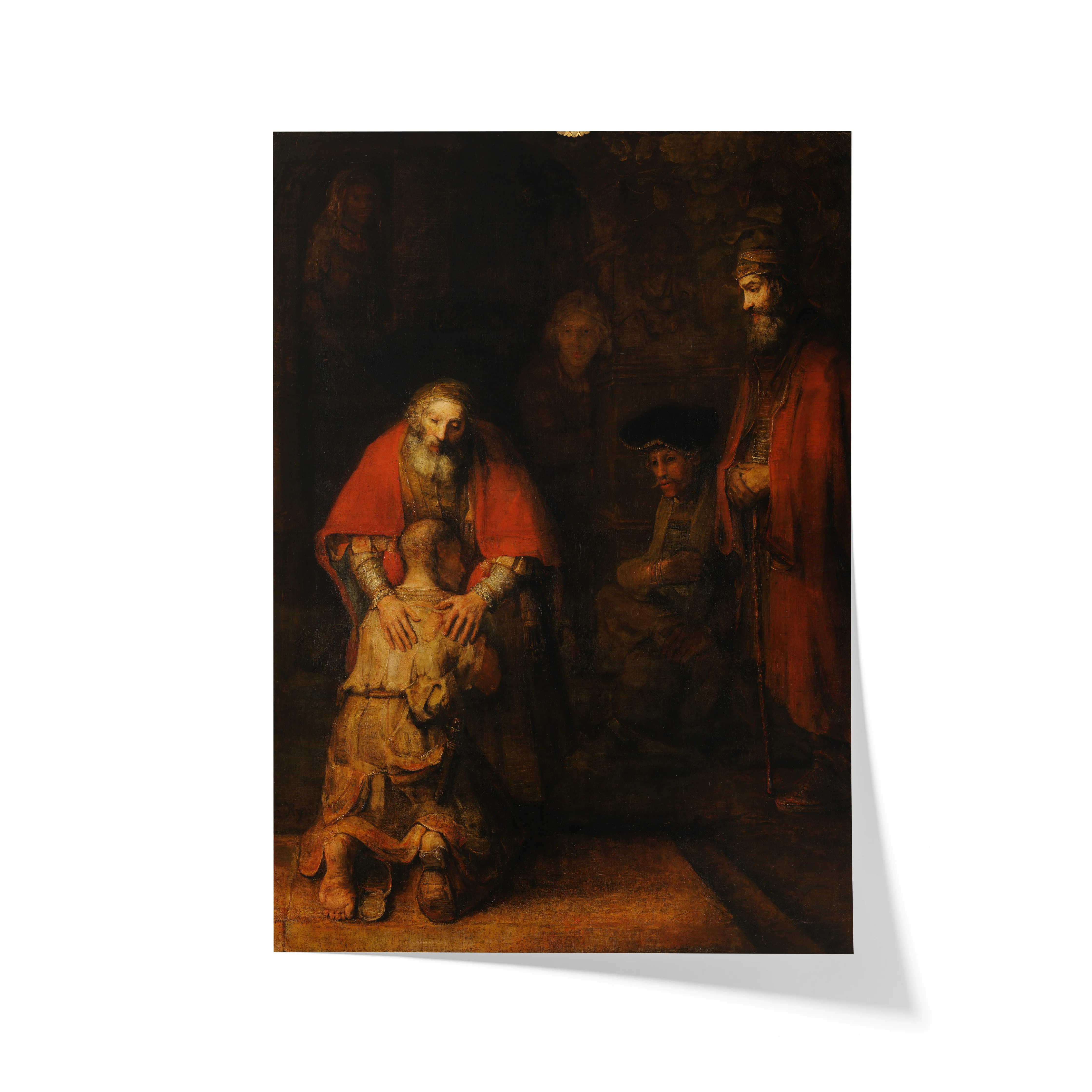
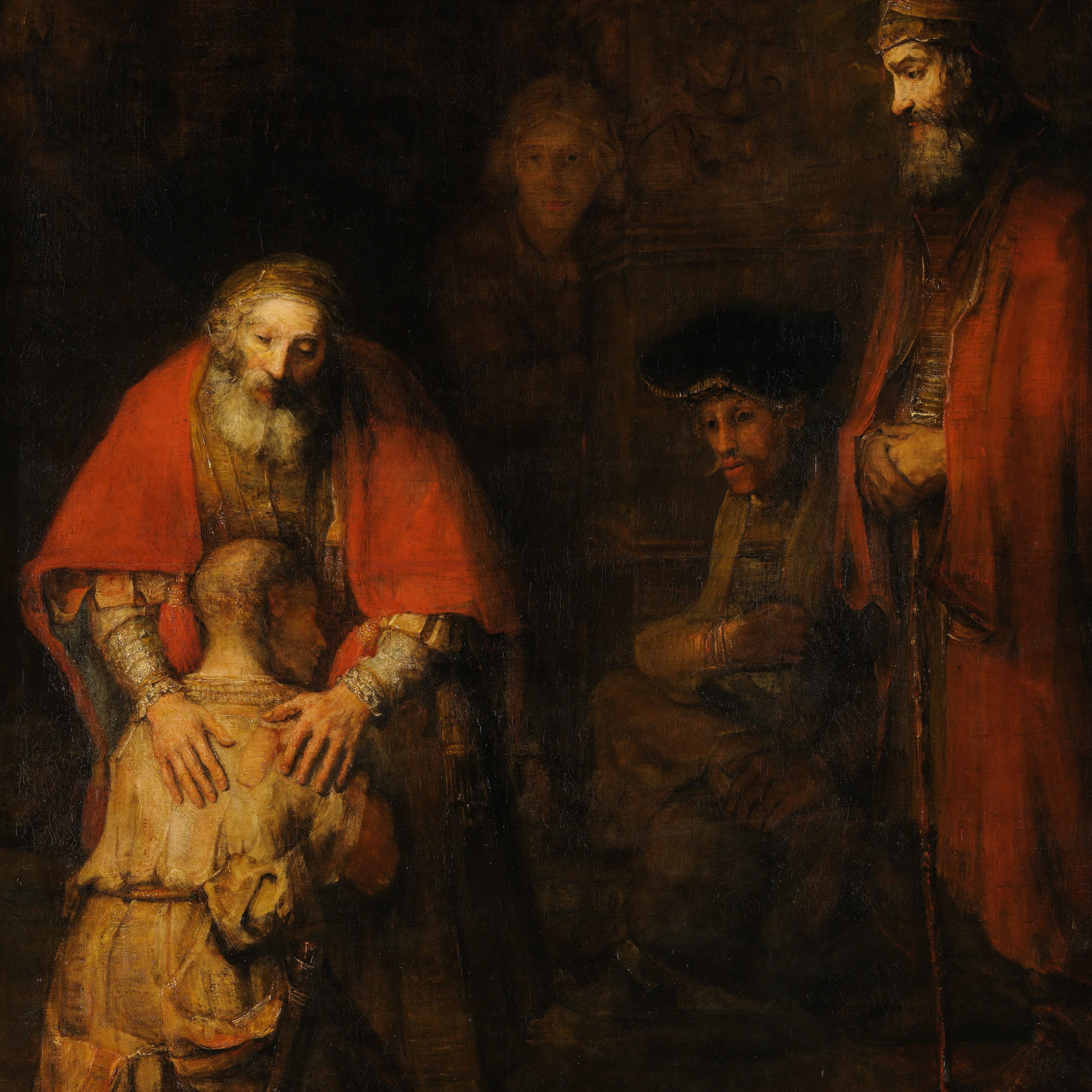
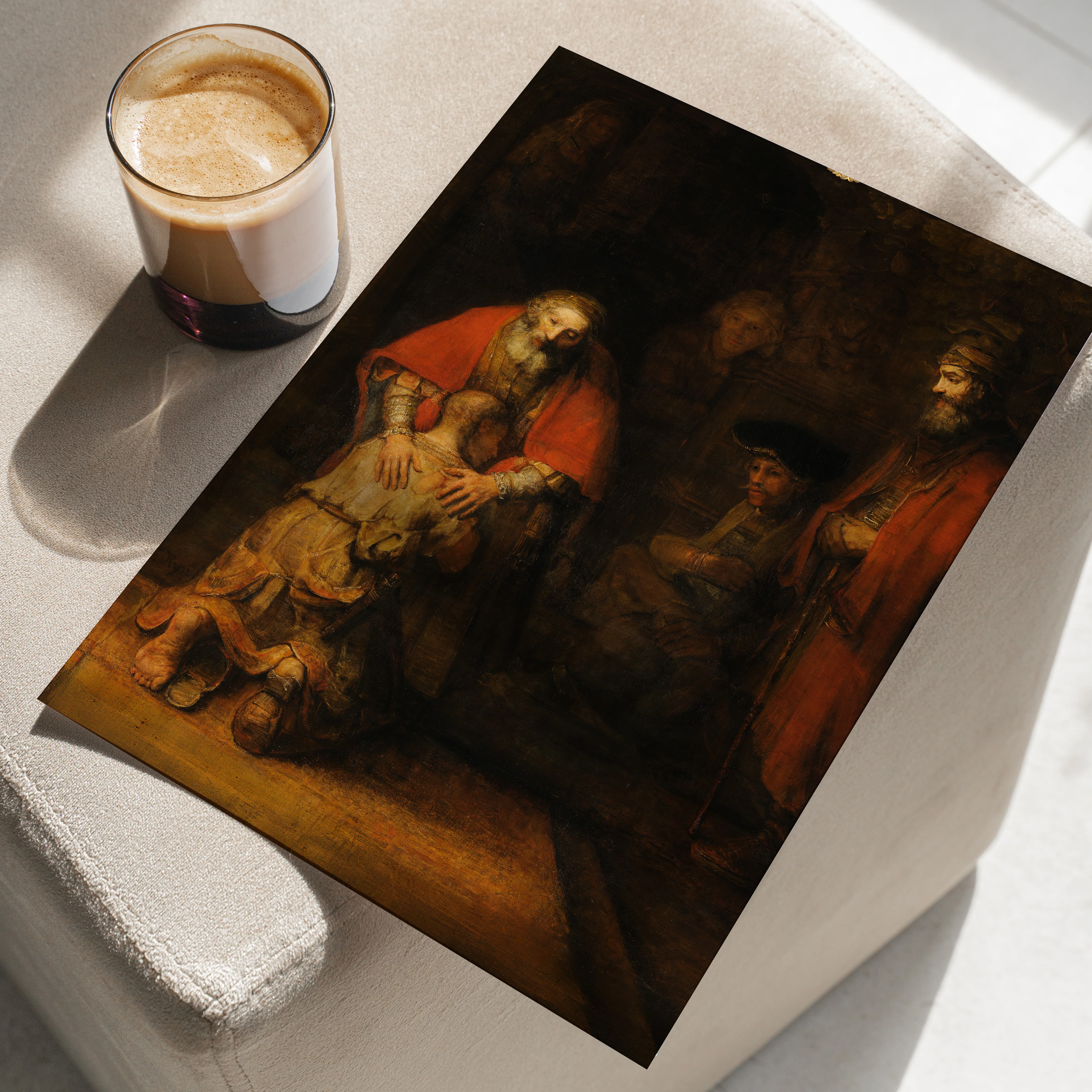
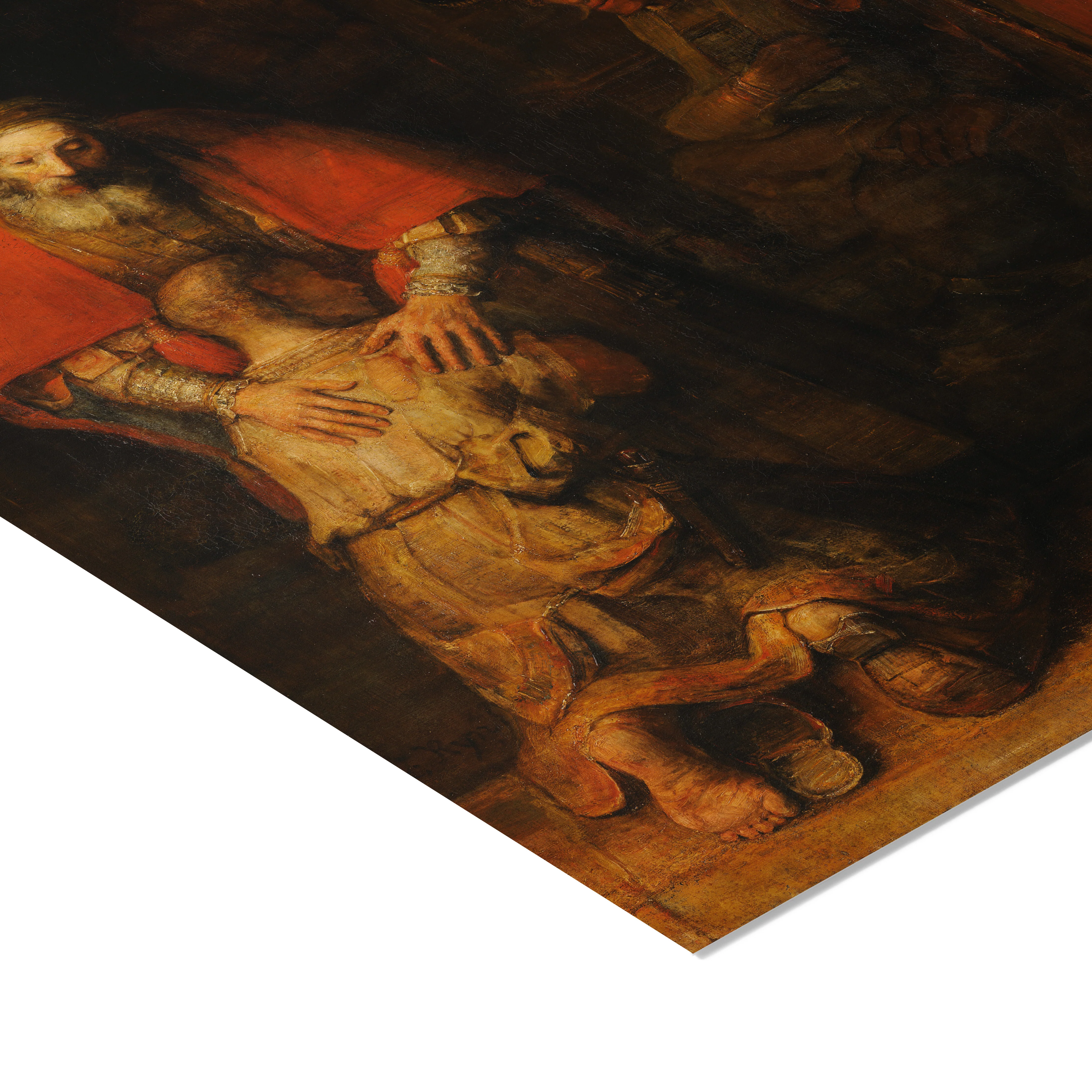
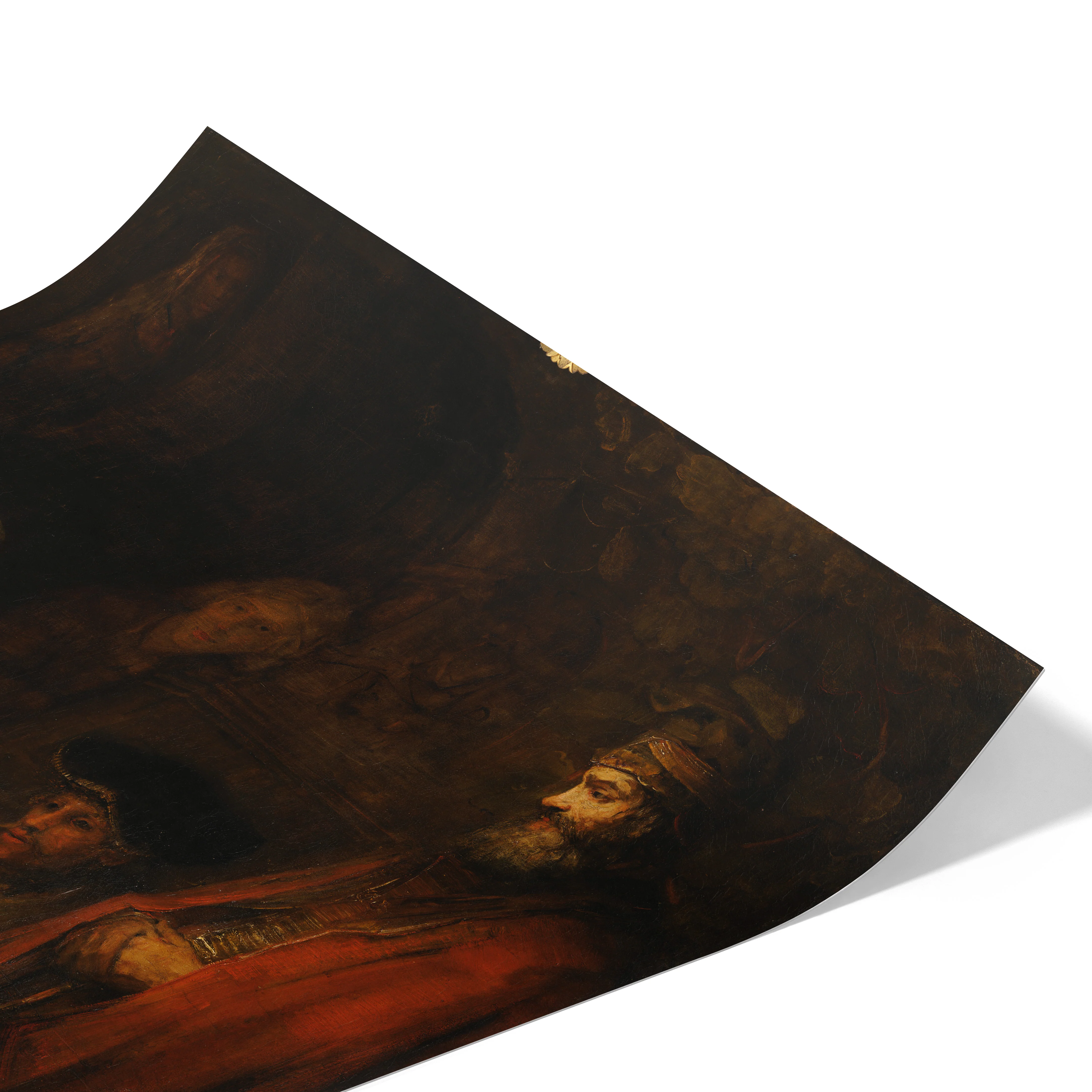
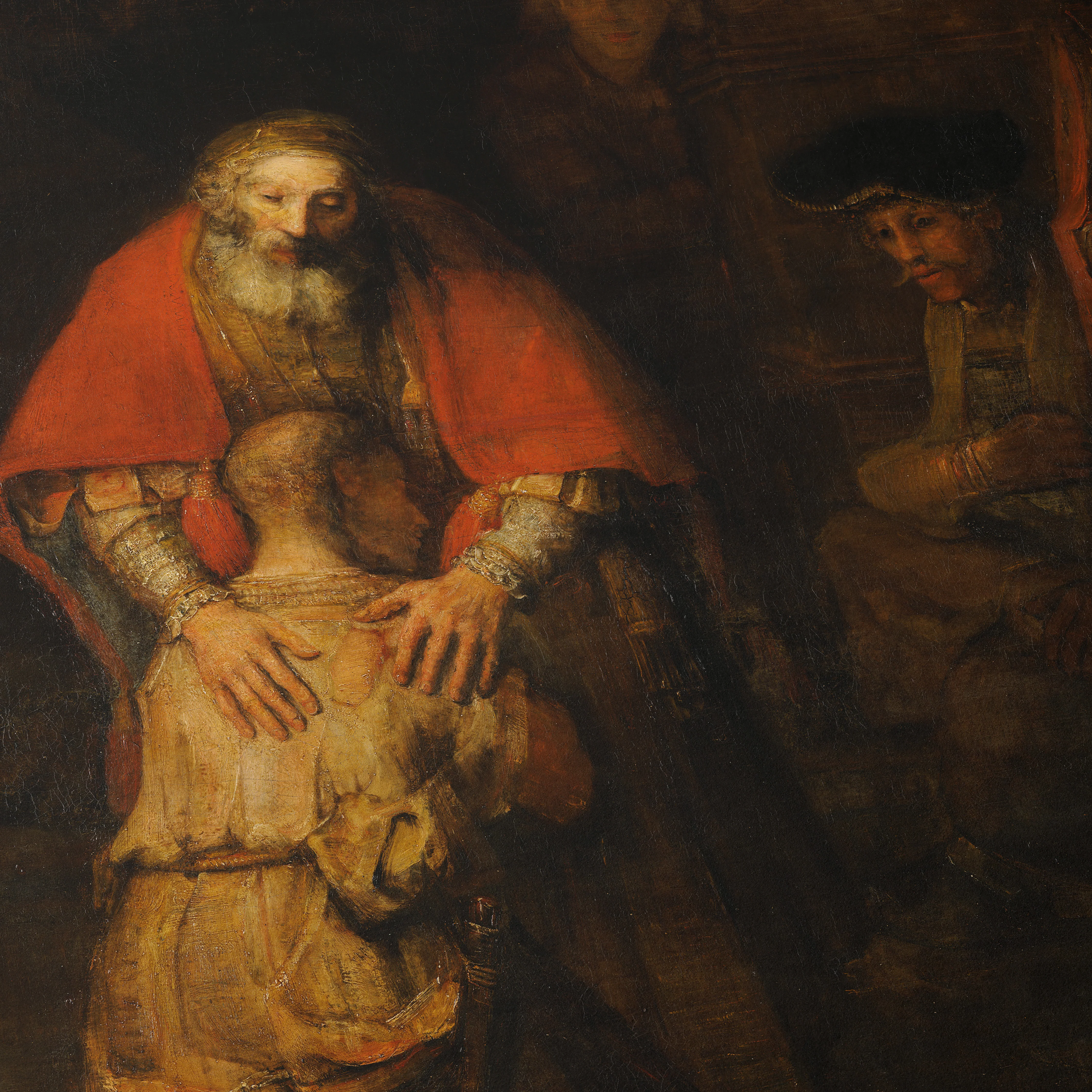
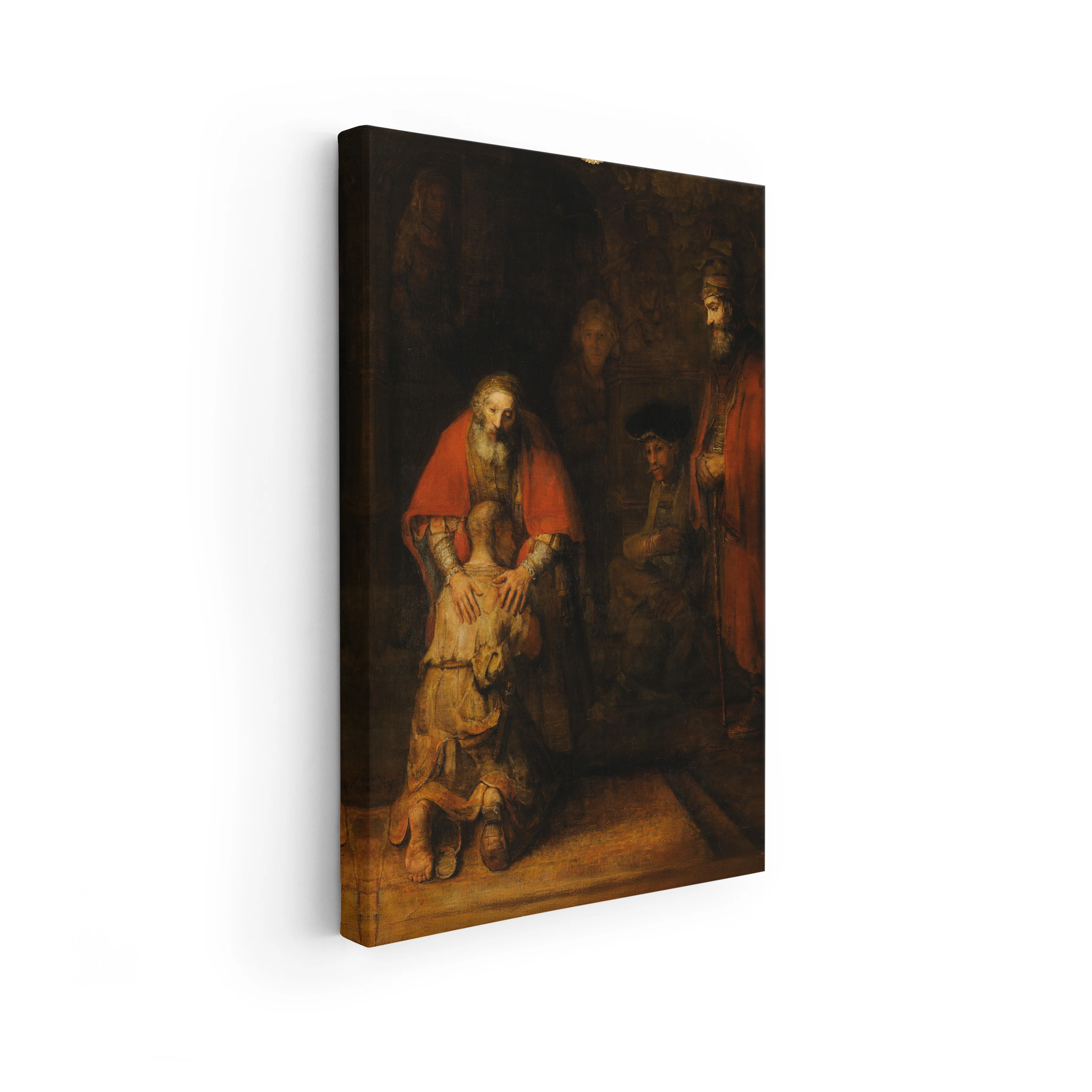
This monumental canvas captures one of the most emotionally charged moments in the Christian tradition: the reunion of the wayward son with his forgiving father. Bathed in a warm, spiritual light that illuminates the central figures, the prodigal son kneels in rags, his head pressed against his father’s chest. The father, aged and nearly blind, bends over him with a gesture of profound tenderness, his large hands resting gently on his son’s back. Around them, silent witnesses emerge from the gloom—figures thought to be the elder brother, a seated man, and a faintly visible woman, each absorbed in their own reaction.
Rembrandt painted this scene at the end of his life, and it reads like a summation of his personal and spiritual journey. Having endured profound loss, disgrace, and isolation, the artist infuses the biblical parable with deeply human compassion. The painting is not just about divine mercy—it is about the quiet, redemptive power of forgiveness and the enduring dignity of human suffering.
Product Information
Product Information
Shipping & Returns
Shipping & Returns
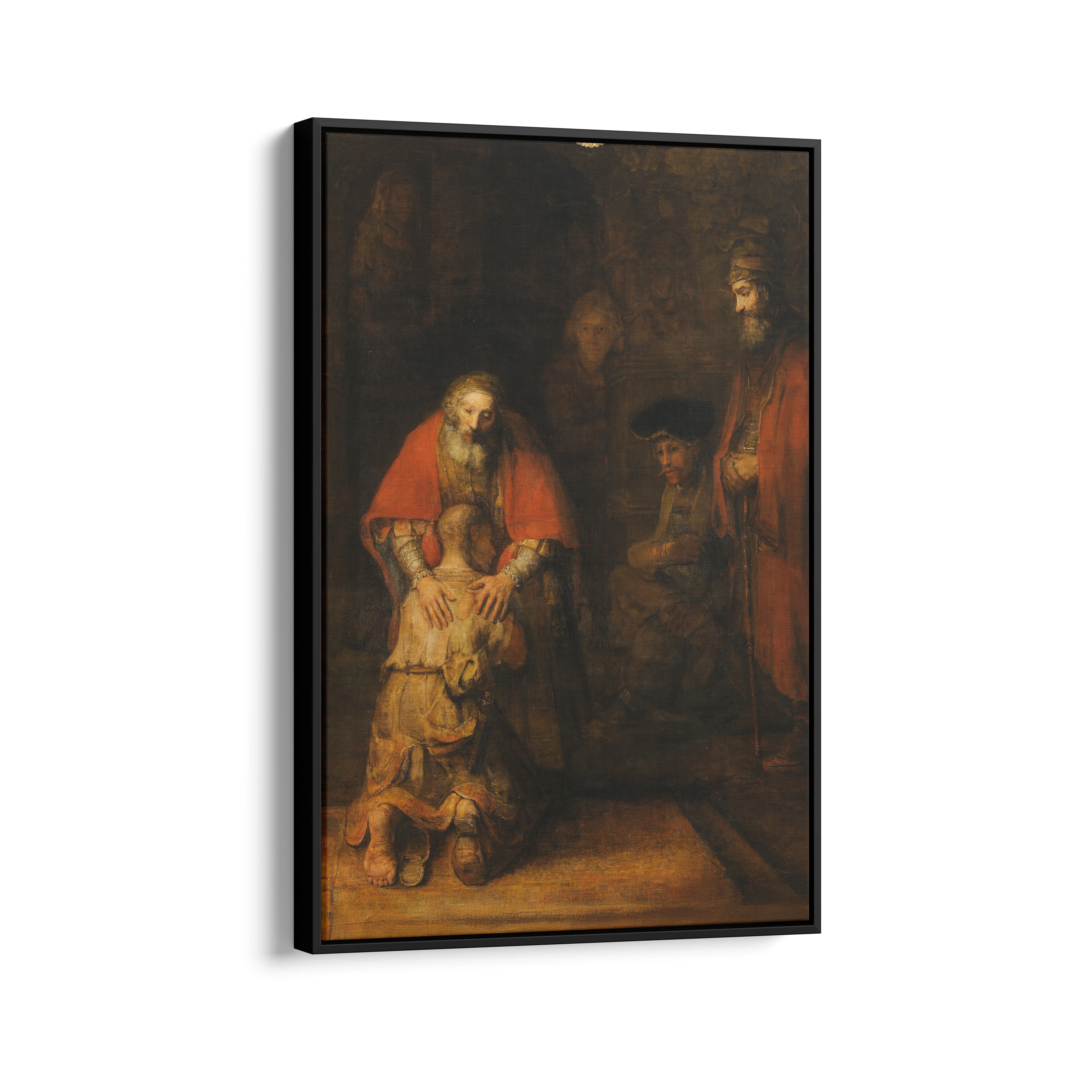
The Return of the Prodigal Son | Rembrandt | 1661-69
The Return of the Prodigal Son | Rembrandt | 1661-69
About the artwork:
This monumental canvas captures one of the most emotionally charged moments in the Christian tradition: the reunion of the wayward son with his forgiving father. Bathed in a warm, spiritual light that illuminates the central figures, the prodigal son kneels in rags, his head pressed against his father’s chest. The father, aged and nearly blind, bends over him with a gesture of profound tenderness, his large hands resting gently on his son’s back. Around them, silent witnesses emerge from the gloom—figures thought to be the elder brother, a seated man, and a faintly visible woman, each absorbed in their own reaction.
Rembrandt painted this scene at the end of his life, and it reads like a summation of his personal and spiritual journey. Having endured profound loss, disgrace, and isolation, the artist infuses the biblical parable with deeply human compassion. The painting is not just about divine mercy—it is about the quiet, redemptive power of forgiveness and the enduring dignity of human suffering.
Original: $297.82
-70%$297.82
$89.35Product Information
Product Information
Shipping & Returns
Shipping & Returns
Description
About the artwork:
This monumental canvas captures one of the most emotionally charged moments in the Christian tradition: the reunion of the wayward son with his forgiving father. Bathed in a warm, spiritual light that illuminates the central figures, the prodigal son kneels in rags, his head pressed against his father’s chest. The father, aged and nearly blind, bends over him with a gesture of profound tenderness, his large hands resting gently on his son’s back. Around them, silent witnesses emerge from the gloom—figures thought to be the elder brother, a seated man, and a faintly visible woman, each absorbed in their own reaction.
Rembrandt painted this scene at the end of his life, and it reads like a summation of his personal and spiritual journey. Having endured profound loss, disgrace, and isolation, the artist infuses the biblical parable with deeply human compassion. The painting is not just about divine mercy—it is about the quiet, redemptive power of forgiveness and the enduring dignity of human suffering.