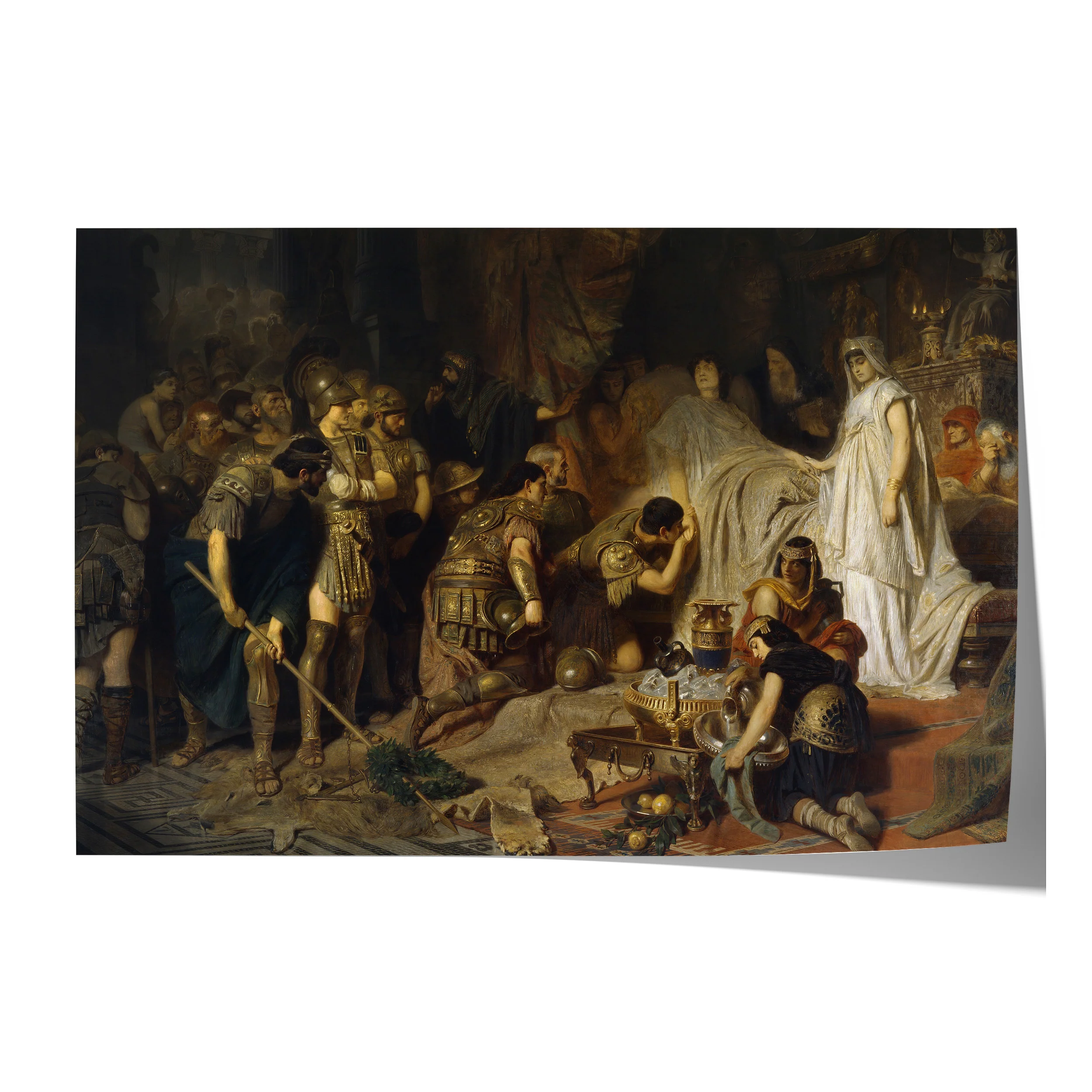
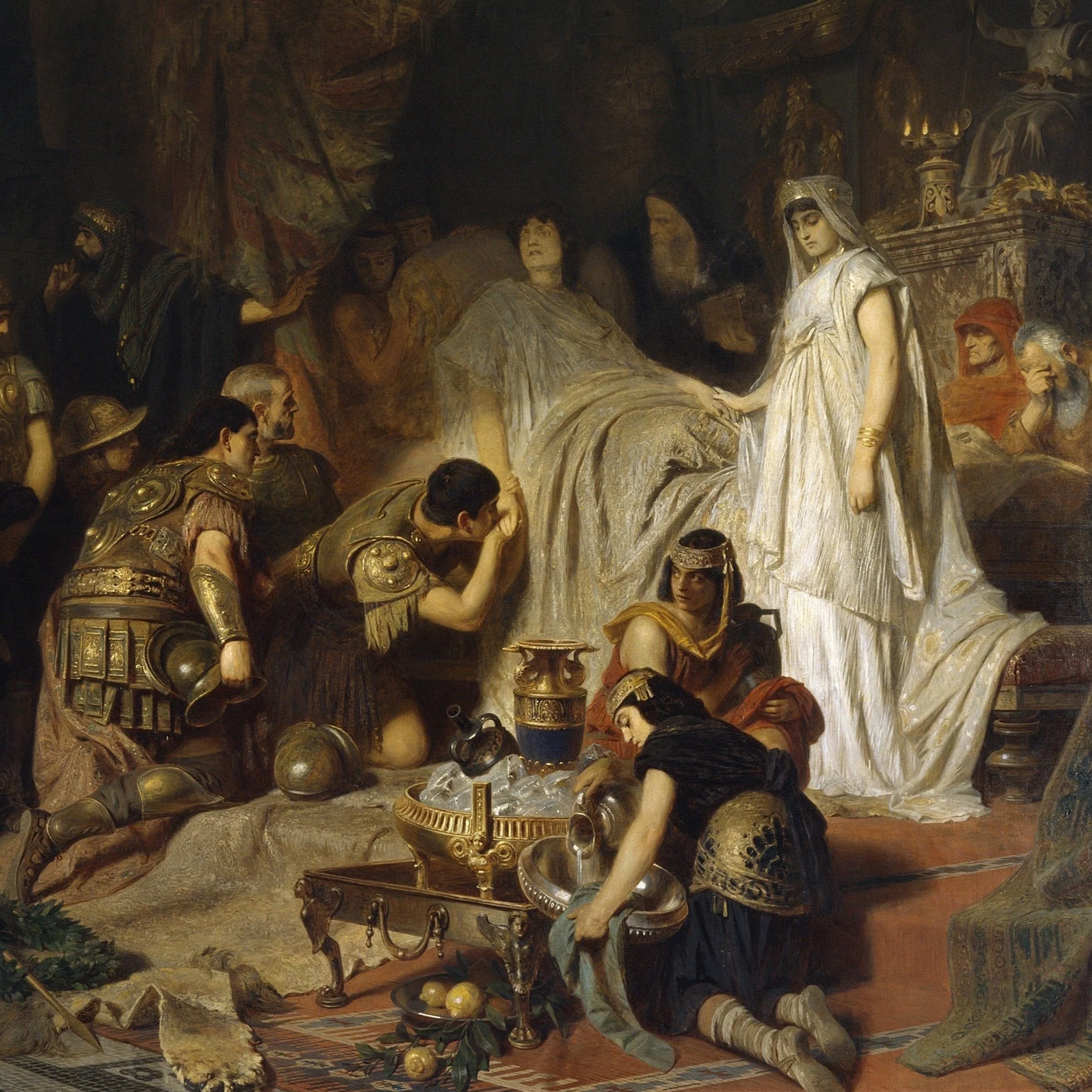
In The Slave Market (1866), Jean-Léon Gérôme captures a disturbing yet meticulously composed scene that reflects both his technical precision and the moral complexity of Orientalist art. The painting shows an Arab man inspecting the teeth of a naked woman being sold as a slave, while others wait to be traded in the background. Gérôme’s hyperrealistic attention to detail—seen in the fabrics, skin tones, and architecture—creates a deceptive sense of authenticity, reinforcing Western fantasies about the “exotic East.” While the work exposes the brutality of slavery, it also indulges in voyeurism, inviting viewers to gaze upon a woman’s humiliation under the guise of ethnographic realism. This tension between moral condemnation and erotic spectacle lies at the heart of Gérôme’s controversial legacy and continues to provoke debate about the ethics of representation in 19th-century Orientalist painting.
The Slave Market | Jean-Léon Gerôme | 1866
About the artwork:
Product Information
Product Information
Shipping & Returns
Shipping & Returns


The Slave Market | Jean-Léon Gerôme | 1866
The Slave Market | Jean-Léon Gerôme | 1866
About the artwork:
Select Select Size
Select Frame Options
From $89.35
Original: $297.82
-70%The Slave Market | Jean-Léon Gerôme | 1866—
$297.82
$89.35Product Information
Product Information
Shipping & Returns
Shipping & Returns
Description
About the artwork: