✨ New Arrivals Just Dropped!Explore
HomeStore

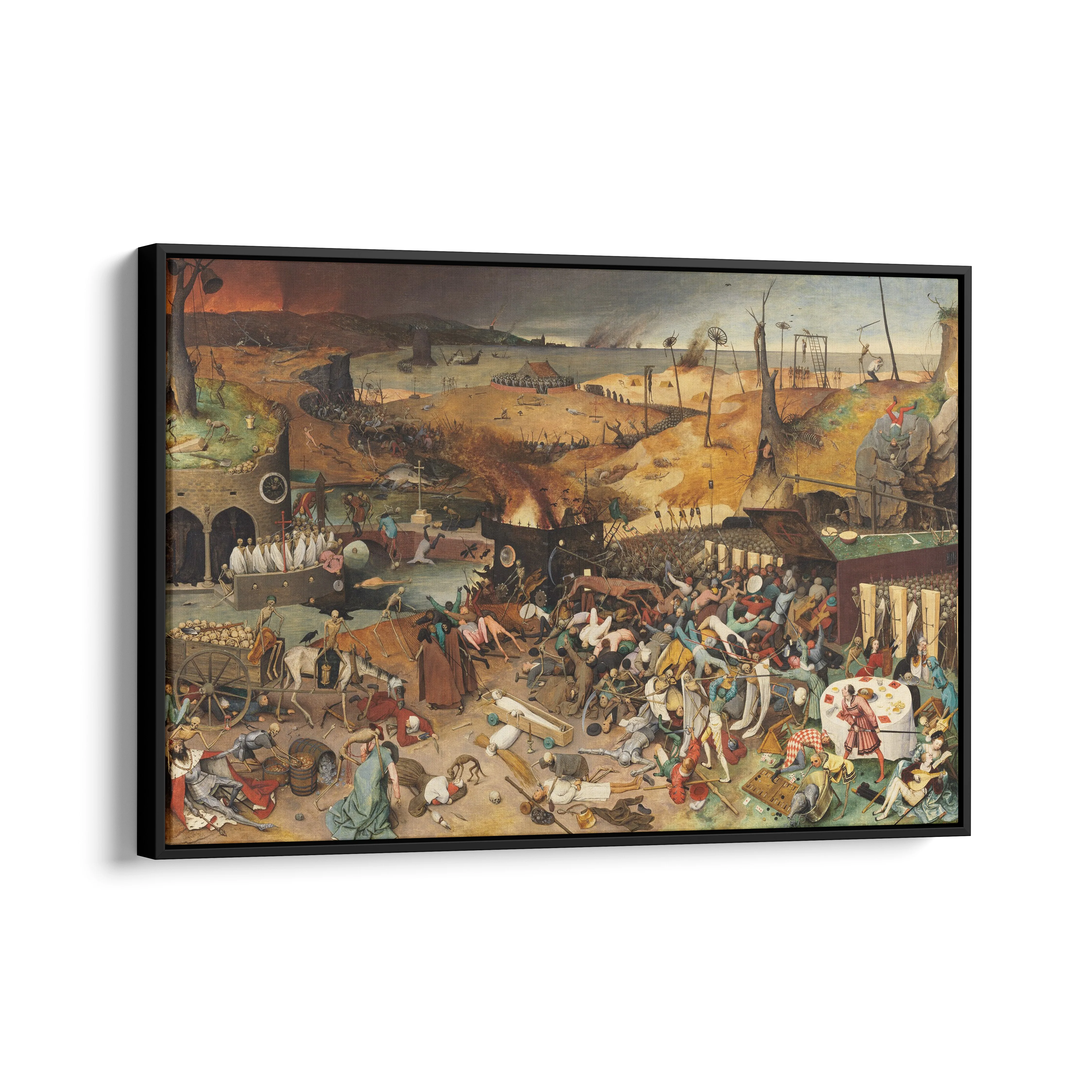
The Triumph of Death | Pieter Bruegel the Elder | c. 1562

Product image 1
Product image 2
Product image 3
Product image 4
Product image 5
Product image 6
Product image 7
Product image 8
Product image 9

The Triumph of Death | Pieter Bruegel the Elder | c. 1562

The Triumph of Death | Pieter Bruegel the Elder | c. 1562

About the artwork:

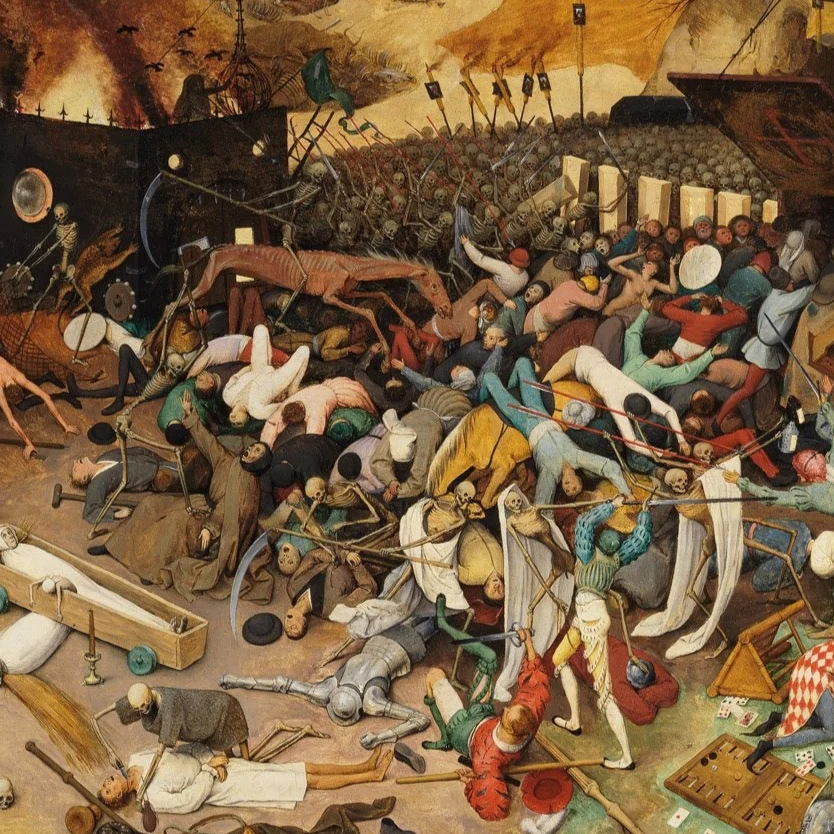
This painting unfolds a harrowing vision of apocalypse, where an army of skeletal figures mercilessly annihilates all of humanity. The scene is chaotic: fires engulf towns in the distance, ships sink in darkened waters, and the land is littered with corpses. At the center, Death, riding a pale horse, leads the carnage as his skeletal minions execute nobles and peasants alike. No one is spared—monarchs, clergy, lovers, and musicians all fall victim to the inevitable fate that awaits them.

Bruegel’s work is a haunting meditation on mortality, reflecting the fears of a Europe devastated by war, famine, and the relentless spread of the plague. The painting draws from medieval Danse Macabre imagery but intensifies its horror by showing Death not as a spectral figure guiding souls, but as a brutal conqueror wiping out civilization. With grim precision, Bruegel presents a world where the constructs of power and status are meaningless in the face of death’s triumph.

Select Select Size
Select Frame Options
From $89.35

Original: $297.82

-70%
The Triumph of Death | Pieter Bruegel the Elder | c. 1562

$297.82

$89.35

Product Information

Shipping & Returns

Description

About the artwork:
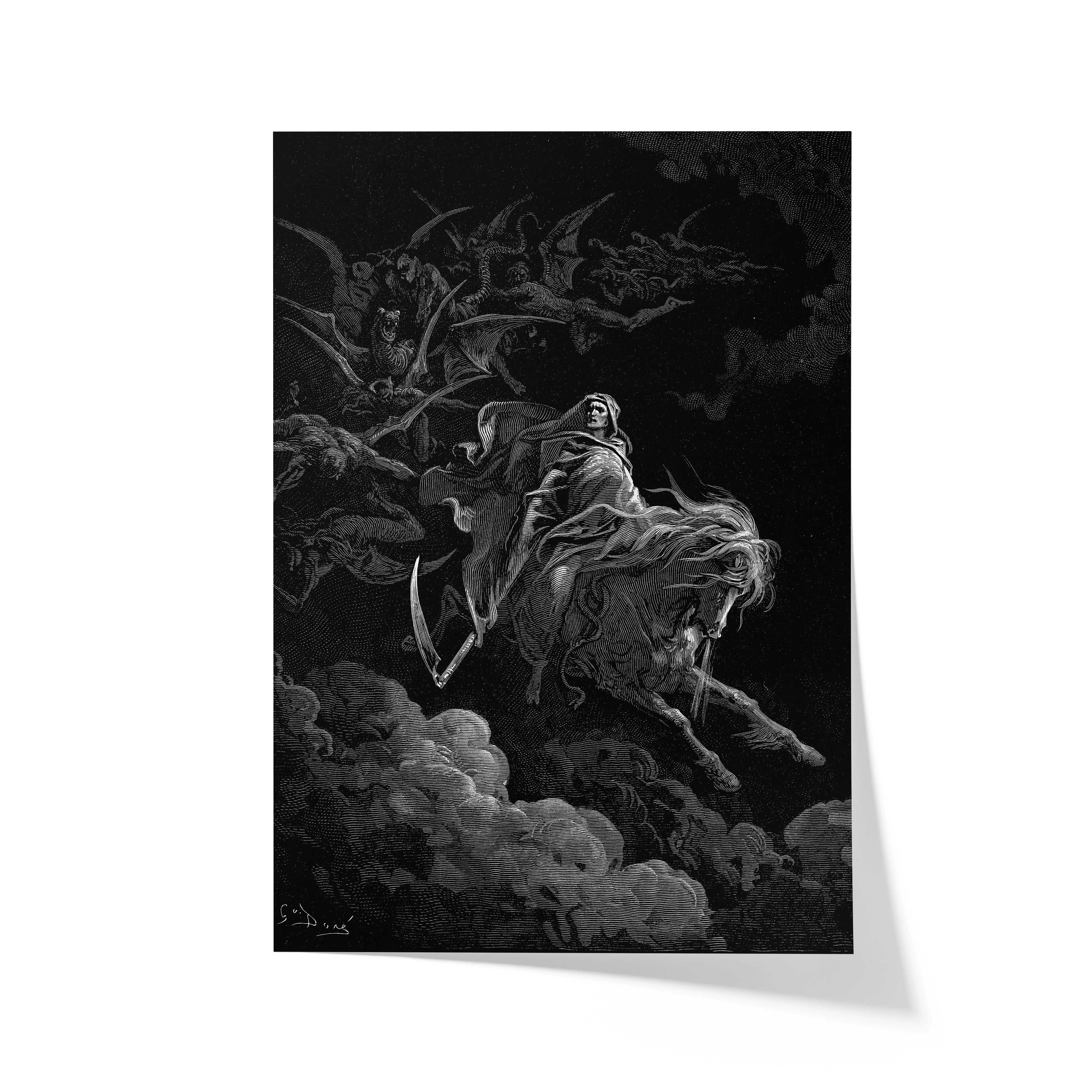
This painting unfolds a harrowing vision of apocalypse, where an army of skeletal figures mercilessly annihilates all of humanity. The scene is chaotic: fires engulf towns in the distance, ships sink in darkened waters, and the land is littered with corpses. At the center, Death, riding a pale horse, leads the carnage as his skeletal minions execute nobles and peasants alike. No one is spared—monarchs, clergy, lovers, and musicians all fall victim to the inevitable fate that awaits them.

Bruegel’s work is a haunting meditation on mortality, reflecting the fears of a Europe devastated by war, famine, and the relentless spread of the plague. The painting draws from medieval Danse Macabre imagery but intensifies its horror by showing Death not as a spectral figure guiding souls, but as a brutal conqueror wiping out civilization. With grim precision, Bruegel presents a world where the constructs of power and status are meaningless in the face of death’s triumph.