The Ugly Duchess | Quinten Massys | 1513
About the artwork:
The Ugly Duchess (1513) by Quinten Matsys is one of the most striking and satirical portraits of the Northern Renaissance. The painting depicts an elderly woman with exaggerated, almost grotesque features—bulging forehead, wrinkled skin, and a distorted jawline—yet dressed in the finery of youth, with a low-cut bodice and elaborate headdress. This tension between age and vanity turns the portrait into both a biting moral commentary and a piece of dark humor, mocking the futility of clinging to lost beauty. Scholars suggest Matsys may have been inspired by Leonardo da Vinci’s caricature drawings, transforming grotesque physiognomy into moral allegory. Over the centuries, the work gained the nickname “The Ugly Duchess,” later influencing John Tenniel’s illustration of the Duchess in Lewis Carroll’s Alice’s Adventures in Wonderland. Beyond ridicule, however, the painting invites us to reflect on deeper themes of human folly, vanity, and the cruel passage of time, rendered with the technical precision of Flemish portraiture.
Product Information
Product Information
Shipping & Returns
Shipping & Returns

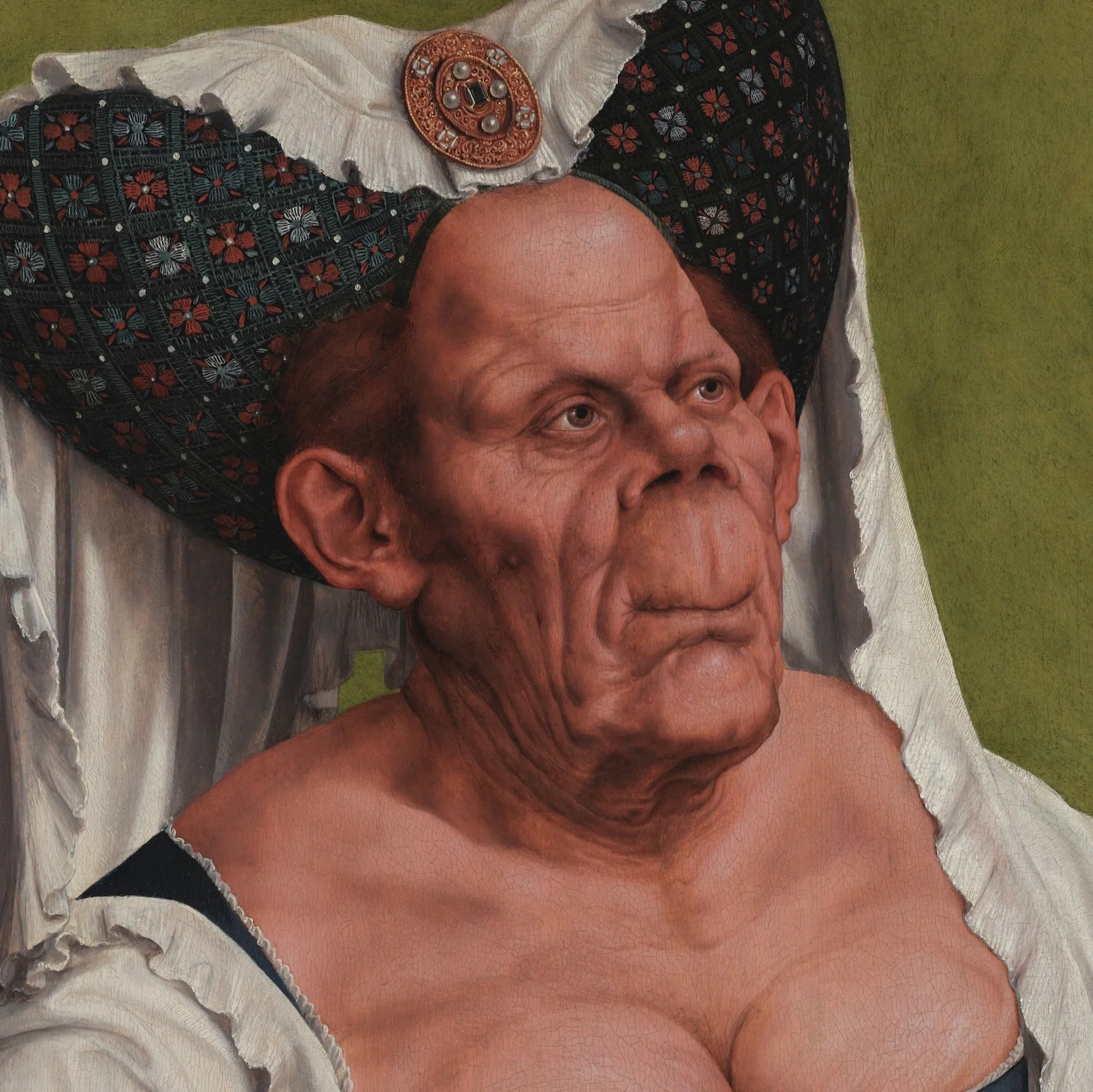


The Ugly Duchess | Quinten Massys | 1513
The Ugly Duchess | Quinten Massys | 1513
About the artwork:
The Ugly Duchess (1513) by Quinten Matsys is one of the most striking and satirical portraits of the Northern Renaissance. The painting depicts an elderly woman with exaggerated, almost grotesque features—bulging forehead, wrinkled skin, and a distorted jawline—yet dressed in the finery of youth, with a low-cut bodice and elaborate headdress. This tension between age and vanity turns the portrait into both a biting moral commentary and a piece of dark humor, mocking the futility of clinging to lost beauty. Scholars suggest Matsys may have been inspired by Leonardo da Vinci’s caricature drawings, transforming grotesque physiognomy into moral allegory. Over the centuries, the work gained the nickname “The Ugly Duchess,” later influencing John Tenniel’s illustration of the Duchess in Lewis Carroll’s Alice’s Adventures in Wonderland. Beyond ridicule, however, the painting invites us to reflect on deeper themes of human folly, vanity, and the cruel passage of time, rendered with the technical precision of Flemish portraiture.
Original: $297.82
-70%$297.82
$89.35Product Information
Product Information
Shipping & Returns
Shipping & Returns
Description
About the artwork:
The Ugly Duchess (1513) by Quinten Matsys is one of the most striking and satirical portraits of the Northern Renaissance. The painting depicts an elderly woman with exaggerated, almost grotesque features—bulging forehead, wrinkled skin, and a distorted jawline—yet dressed in the finery of youth, with a low-cut bodice and elaborate headdress. This tension between age and vanity turns the portrait into both a biting moral commentary and a piece of dark humor, mocking the futility of clinging to lost beauty. Scholars suggest Matsys may have been inspired by Leonardo da Vinci’s caricature drawings, transforming grotesque physiognomy into moral allegory. Over the centuries, the work gained the nickname “The Ugly Duchess,” later influencing John Tenniel’s illustration of the Duchess in Lewis Carroll’s Alice’s Adventures in Wonderland. Beyond ridicule, however, the painting invites us to reflect on deeper themes of human folly, vanity, and the cruel passage of time, rendered with the technical precision of Flemish portraiture.