Three Witches and Three Wolves | Eugène Grasset | 1900
About the artwork:
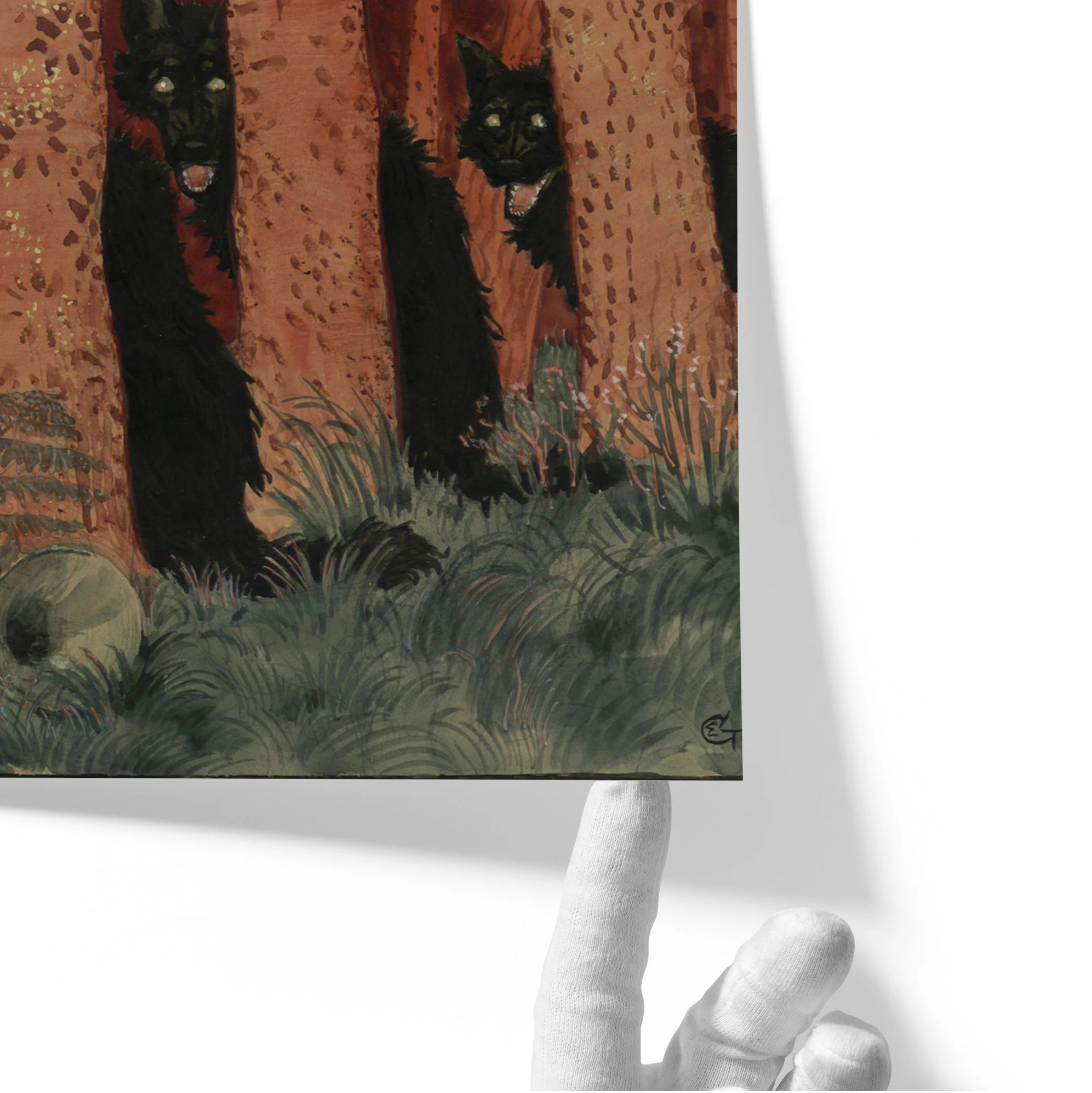
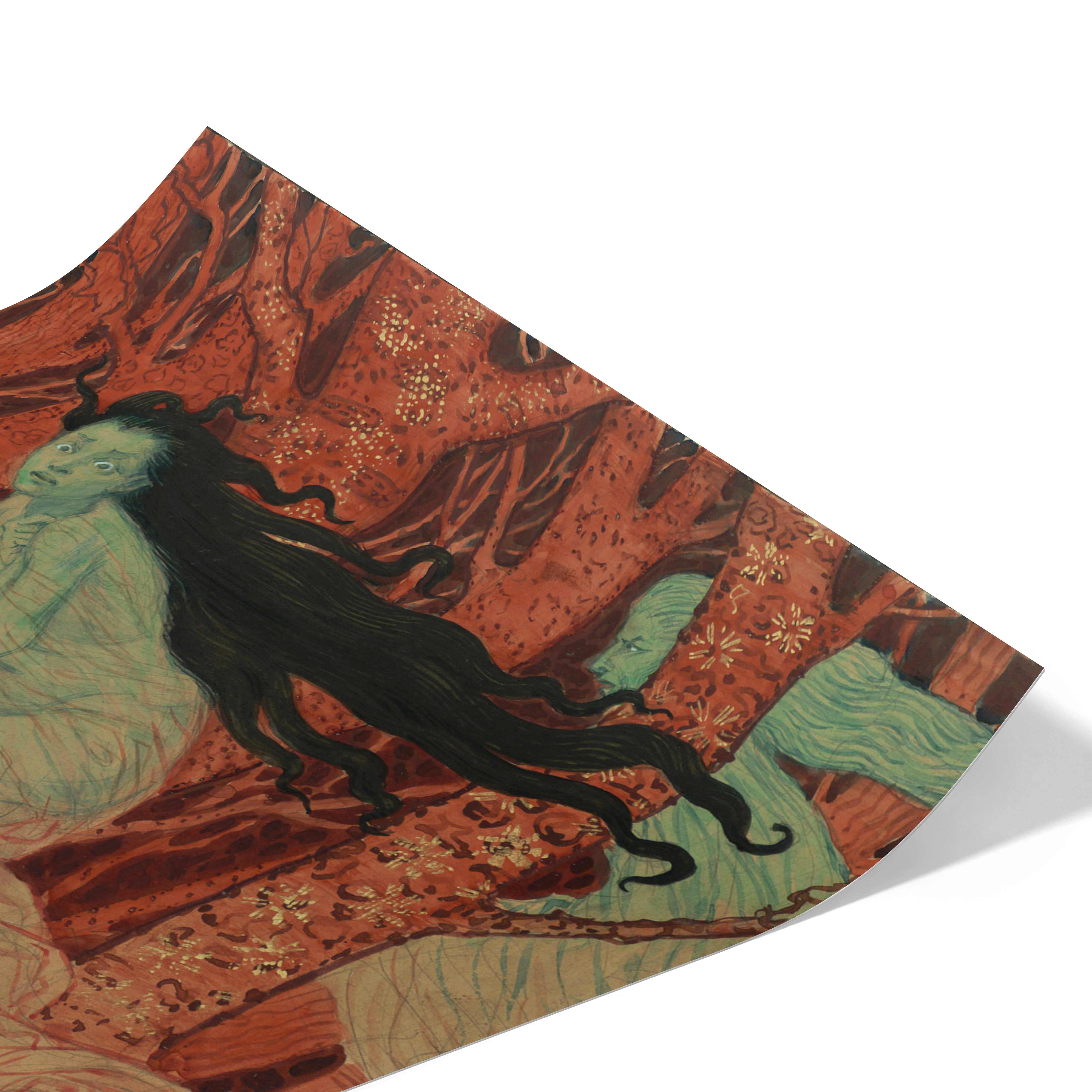
Eugène Grasset’s Three Witches and Three Wolves (c. 1900) conjures a hypnotic forest scene where three ethereal women dart through a grove of burnt-orange trunks, their flowing robes merging with the fiery surroundings to evoke both unity with and dominion over nature. Behind them, three sleek black wolves emerge from shadowy recesses, their piercing eyes and taut bodies heightening the tension between the human and the wild. Grasset’s mastery shines in his richly ornamental treatment of bark and foliage, where intricate patterns shimmer and echo the sinuous folds of the witches’ garments, creating a visual dance between the organic and the supernatural. The arrangement of diagonal figures against vertical elements intensifies the scene’s dynamic energy, trapping the viewer in a moment of charged stillness—a haunting emblem of Art Nouveau’s fascination with mysticism, ritual, and the delicate boundary between civilization and nature’s untamed power.
Product Information
Product Information
Shipping & Returns
Shipping & Returns





Three Witches and Three Wolves | Eugène Grasset | 1900
Three Witches and Three Wolves | Eugène Grasset | 1900
About the artwork:
Eugène Grasset’s Three Witches and Three Wolves (c. 1900) conjures a hypnotic forest scene where three ethereal women dart through a grove of burnt-orange trunks, their flowing robes merging with the fiery surroundings to evoke both unity with and dominion over nature. Behind them, three sleek black wolves emerge from shadowy recesses, their piercing eyes and taut bodies heightening the tension between the human and the wild. Grasset’s mastery shines in his richly ornamental treatment of bark and foliage, where intricate patterns shimmer and echo the sinuous folds of the witches’ garments, creating a visual dance between the organic and the supernatural. The arrangement of diagonal figures against vertical elements intensifies the scene’s dynamic energy, trapping the viewer in a moment of charged stillness—a haunting emblem of Art Nouveau’s fascination with mysticism, ritual, and the delicate boundary between civilization and nature’s untamed power.
Original: $297.82
-70%$297.82
$89.35Product Information
Product Information
Shipping & Returns
Shipping & Returns
Description
About the artwork:
Eugène Grasset’s Three Witches and Three Wolves (c. 1900) conjures a hypnotic forest scene where three ethereal women dart through a grove of burnt-orange trunks, their flowing robes merging with the fiery surroundings to evoke both unity with and dominion over nature. Behind them, three sleek black wolves emerge from shadowy recesses, their piercing eyes and taut bodies heightening the tension between the human and the wild. Grasset’s mastery shines in his richly ornamental treatment of bark and foliage, where intricate patterns shimmer and echo the sinuous folds of the witches’ garments, creating a visual dance between the organic and the supernatural. The arrangement of diagonal figures against vertical elements intensifies the scene’s dynamic energy, trapping the viewer in a moment of charged stillness—a haunting emblem of Art Nouveau’s fascination with mysticism, ritual, and the delicate boundary between civilization and nature’s untamed power.