✨ New Arrivals Just Dropped!Explore
HomeStore

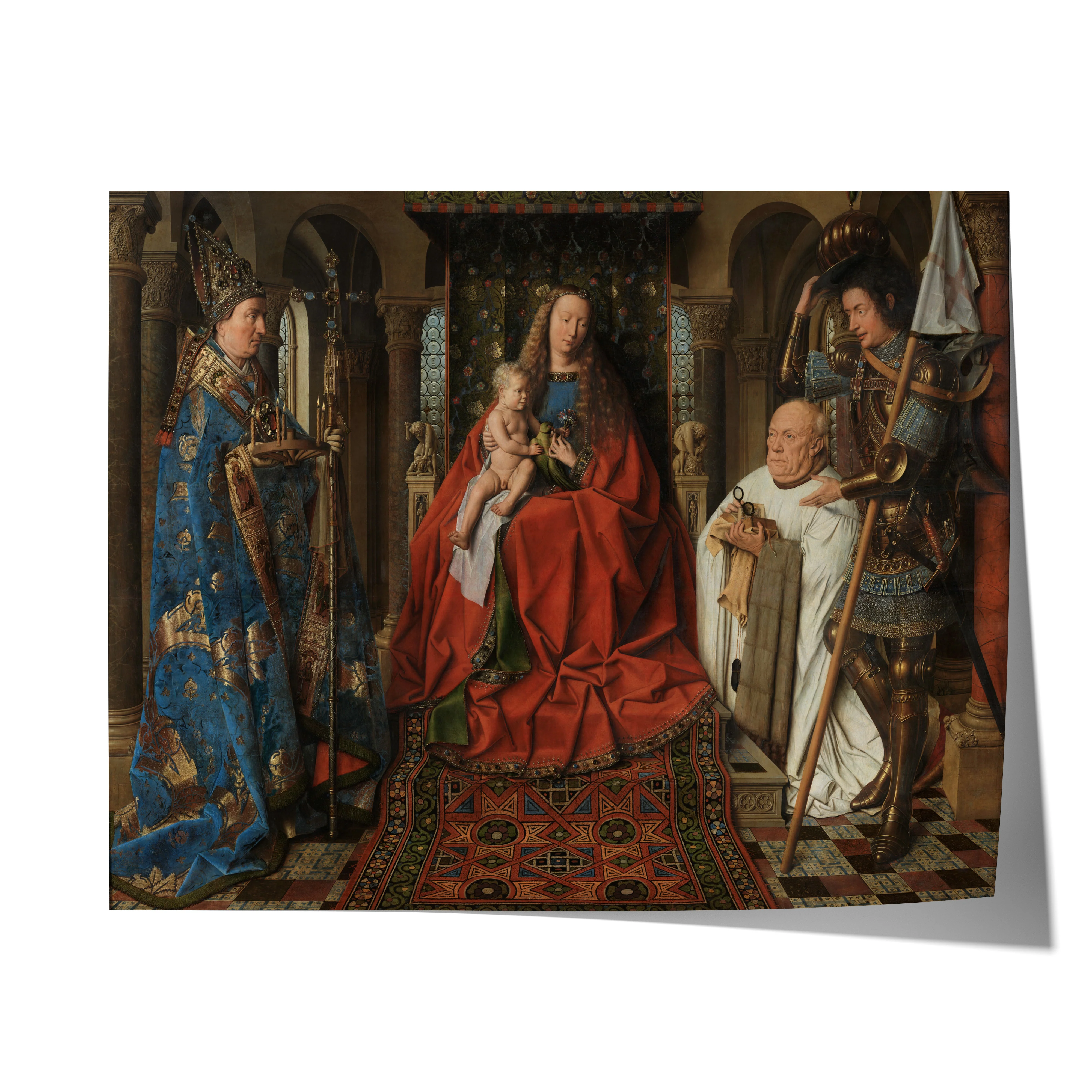
Virgin and Child with Canon van der Paele | Jan van Eyck | c. 1434-36

Product image 1
Product image 2
Product image 3
Product image 4
Product image 5
Product image 6
Product image 7
Product image 8
Product image 9
Product image 10

Virgin and Child with Canon van der Paele | Jan van Eyck | c. 1434-36

Virgin and Child with Canon van der Paele | Jan van Eyck | c. 1434-36

About the artwork:

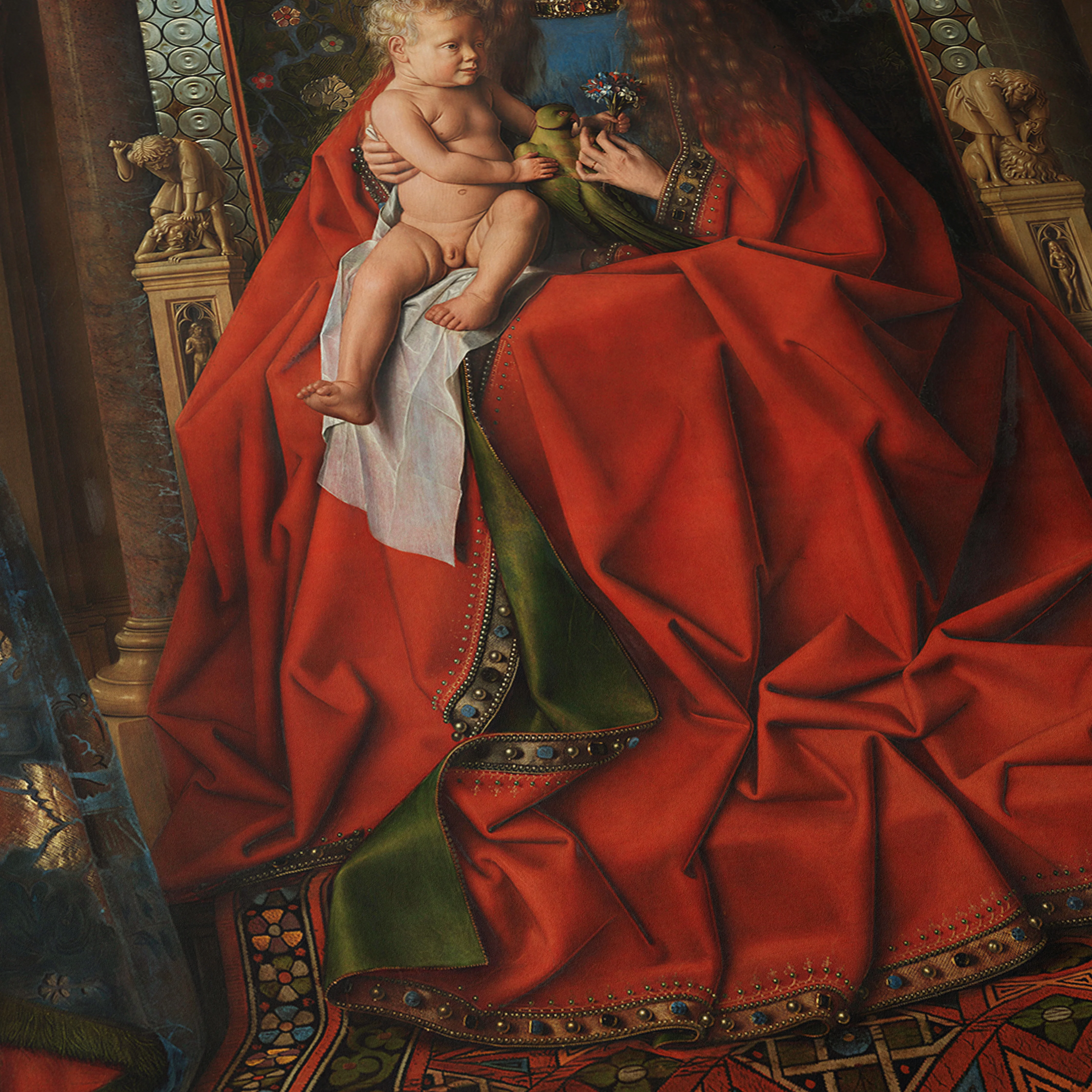
Jan van Eyck’s Virgin and Child with Canon van der Paele is one of the most important works of early Flemish painting, completed in 1436 for Joris van der Paele, a canon of Saint Donatian’s Church in Bruges. The composition presents the Virgin and Child enthroned in a sacred interior, with Saint Donatian on one side and Saint George introducing the kneeling donor on the other. Van Eyck turns a devotional image into a highly detailed act of remembrance, showing Van der Paele with his prayer book and glasses as a real, aging individual rather than an idealized figure. The painting is remarkable for its precise rendering of fabrics, armor, skin, inscriptions, and reflected light, qualities made possible by Van Eyck’s advanced use of oil paint. Its meaning combines personal devotion, public status, and the hope for spiritual salvation, while also demonstrating the artist’s exceptional ability to make religious vision feel physically present.

Select Select Size
Select Frame Options
From $121.52

Original: $405.08

-70%
Virgin and Child with Canon van der Paele | Jan van Eyck | c. 1434-36

$405.08

$121.52

Product Information

Shipping & Returns

Description

About the artwork:
Jan van Eyck’s Virgin and Child with Canon van der Paele is one of the most important works of early Flemish painting, completed in 1436 for Joris van der Paele, a canon of Saint Donatian’s Church in Bruges. The composition presents the Virgin and Child enthroned in a sacred interior, with Saint Donatian on one side and Saint George introducing the kneeling donor on the other. Van Eyck turns a devotional image into a highly detailed act of remembrance, showing Van der Paele with his prayer book and glasses as a real, aging individual rather than an idealized figure. The painting is remarkable for its precise rendering of fabrics, armor, skin, inscriptions, and reflected light, qualities made possible by Van Eyck’s advanced use of oil paint. Its meaning combines personal devotion, public status, and the hope for spiritual salvation, while also demonstrating the artist’s exceptional ability to make religious vision feel physically present.