Working Class City | Hans Baluschek | 1920
About the artwork:
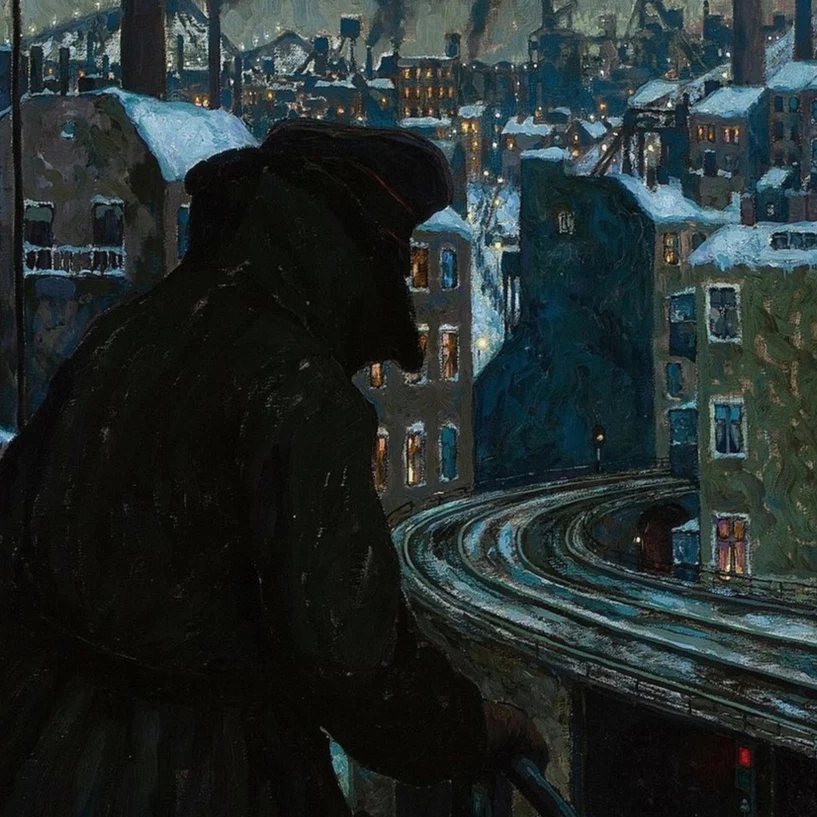
Working Class City (1920) by Hans Baluschek is a stark, almost oppressive vision of industrial modernity that reflects the harsh realities of post–World War I Germany. The painting shows endless rows of factory buildings and smokestacks under a heavy, gray sky, with no trace of natural beauty or human warmth. Baluschek, known for his socially conscious work, strips away any sense of romanticism, presenting the city as a machine that consumes both land and people. The absence of individuality—everything reduced to blocks, pipes, and chimneys—emphasizes alienation in the industrial age. Created during the turmoil of the Weimar Republic, the piece serves as both a social critique and a prophetic warning, capturing the bleak monotony of working-class existence in a mechanized, unforgiving world.
Product Information
Product Information
Shipping & Returns
Shipping & Returns


Working Class City | Hans Baluschek | 1920
About the artwork:
Working Class City (1920) by Hans Baluschek is a stark, almost oppressive vision of industrial modernity that reflects the harsh realities of post–World War I Germany. The painting shows endless rows of factory buildings and smokestacks under a heavy, gray sky, with no trace of natural beauty or human warmth. Baluschek, known for his socially conscious work, strips away any sense of romanticism, presenting the city as a machine that consumes both land and people. The absence of individuality—everything reduced to blocks, pipes, and chimneys—emphasizes alienation in the industrial age. Created during the turmoil of the Weimar Republic, the piece serves as both a social critique and a prophetic warning, capturing the bleak monotony of working-class existence in a mechanized, unforgiving world.
Original: $297.82
-70%$297.82
$89.35Product Information
Product Information
Shipping & Returns
Shipping & Returns
Description
About the artwork:
Working Class City (1920) by Hans Baluschek is a stark, almost oppressive vision of industrial modernity that reflects the harsh realities of post–World War I Germany. The painting shows endless rows of factory buildings and smokestacks under a heavy, gray sky, with no trace of natural beauty or human warmth. Baluschek, known for his socially conscious work, strips away any sense of romanticism, presenting the city as a machine that consumes both land and people. The absence of individuality—everything reduced to blocks, pipes, and chimneys—emphasizes alienation in the industrial age. Created during the turmoil of the Weimar Republic, the piece serves as both a social critique and a prophetic warning, capturing the bleak monotony of working-class existence in a mechanized, unforgiving world.